11/26/26 Update: The Pittsburgh Public Schools Future Ready Plan failed a school board vote on the night of November 25th leaving its fate uncertain at this time.
A Major Reorganization
As you may have heard, a major reorganization of Pittsburgh Public Schools could take effect as soon as the 2026-2027 school year. Dubbed by district leadership the “Future Ready Plan” the reorganization aims to improve student learning outcomes, advance equity and lower expenses. At the heart of the plan is reconsolidating schools into elementary, middle, and high schools as opposed to the current K-5, K-8, 6-8, 6-12, and 9-12 grade configurations and ending some magnet programs that had students attending schools further from their homes. Altogether, the reorganization seeks to close nine school buildings while modernizing others, with most changes taking place by the fall of 2026. According to district leaders, the plan could save over a hundred million dollars in facilities costs and allow the district to better focus its resources on the student experience and improved educational outcomes.
The Impact on Transportation and Education
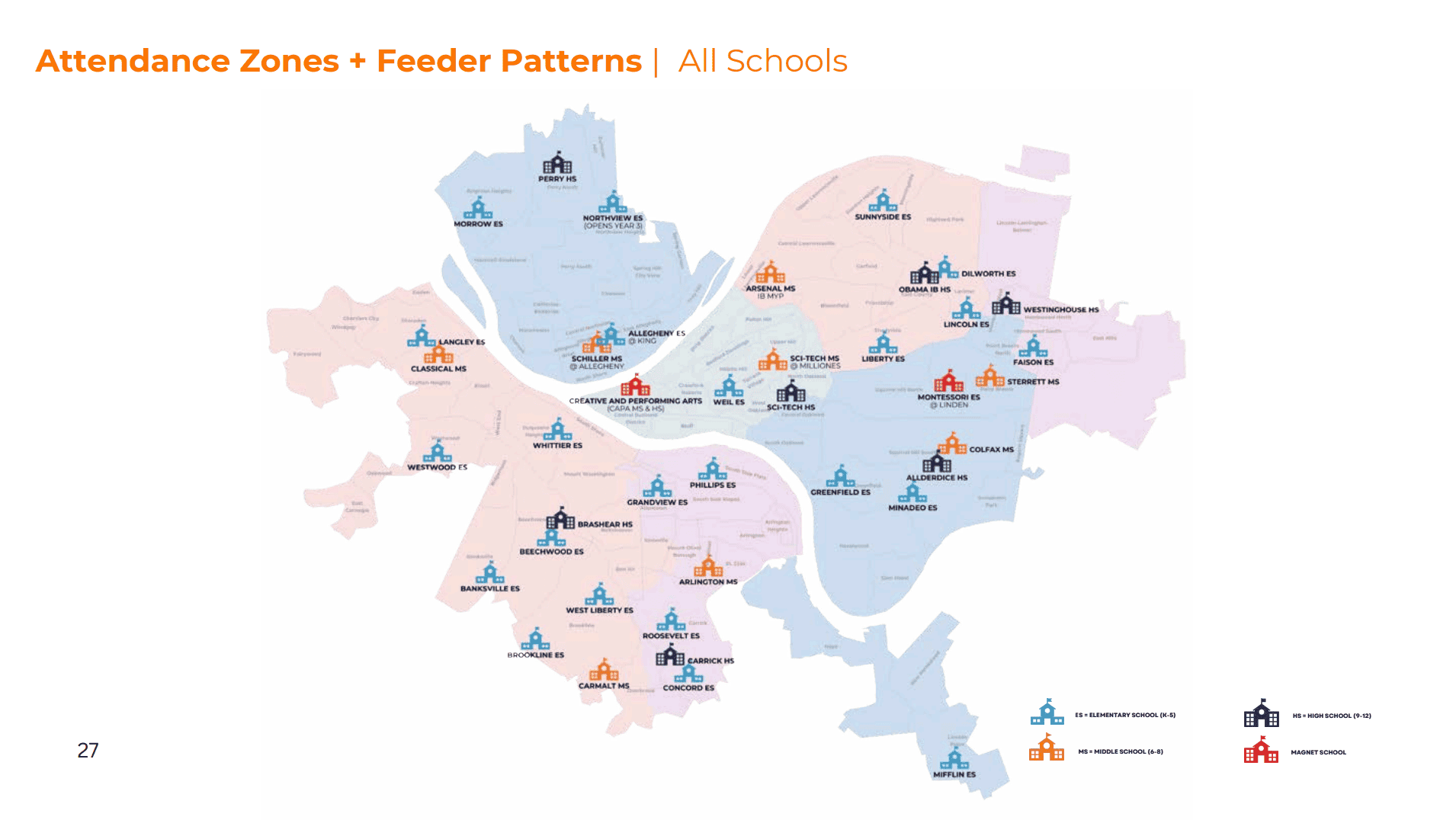
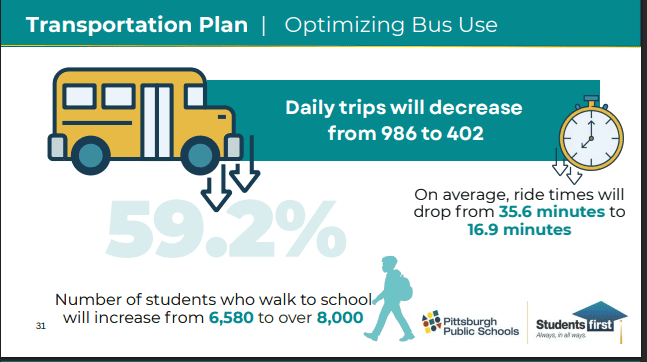
A crucial aspect of the plan would be its impact on student transportation. According to the district, updated attendance zones, the neighborhoods where a school’s students come from, and feeder patterns, which schools “feed” into others as their students advance in grades, would correct “Legacy Missalignments” and “Respect Geography.” In other words, having students attend schools closer to where they live. The district posits that these realignments would decrease daily school bus trips by nearly 60% from 982 to 402 and increase the number of students walking, or living within the walk zone of their school and ineligible for busing, from 6,580 to 8,000.
The plan, understandably, has drawn criticism from some school board members, school staff, and community members concerned about the whirlwind pace of school transitions, dislocation of staff and students, and closing of beloved neighborhood schools. There are also historic concerns about the role of busing or the lack thereof in the integration of Pittsburgh schools and racial disparities in educational outcomes. However, if the plan goes through, district leaders believe that concentrated resources will provide better learning opportunities for all students regardless of the buildings they attend. We are also hopeful that the recently launched Thrive Outside initiative will connect more Pittsburgh schools with outdoor activities and education during the school day. BikePGH is excited to be a Thrive Outside Community Partner and looks forward to expanding bike education in Pittsburgh Public Schools with their support.
Lastly, an increase in students possibly walking and biking should come with a renewed commitment to safe routes to school so that active transportation is a safe and enjoyable option for all students and not an afterthought for when a school bus or personal vehicle is unavailable. We believe that school communities can be agents for change by advocating along with neighborhood bike and pedestrian groups for safety improvements to streets and sidewalks around schools and working together to promote active transportation. Walking and biking buses, Walk and Roll to School Day celebrations, and in-school bike and pedestrian education are all excellent ways to promote safe active transportation to the school campus and make the school experience more enriching and enjoyable for students, parents, and staff alike.
 NEWSLETTER