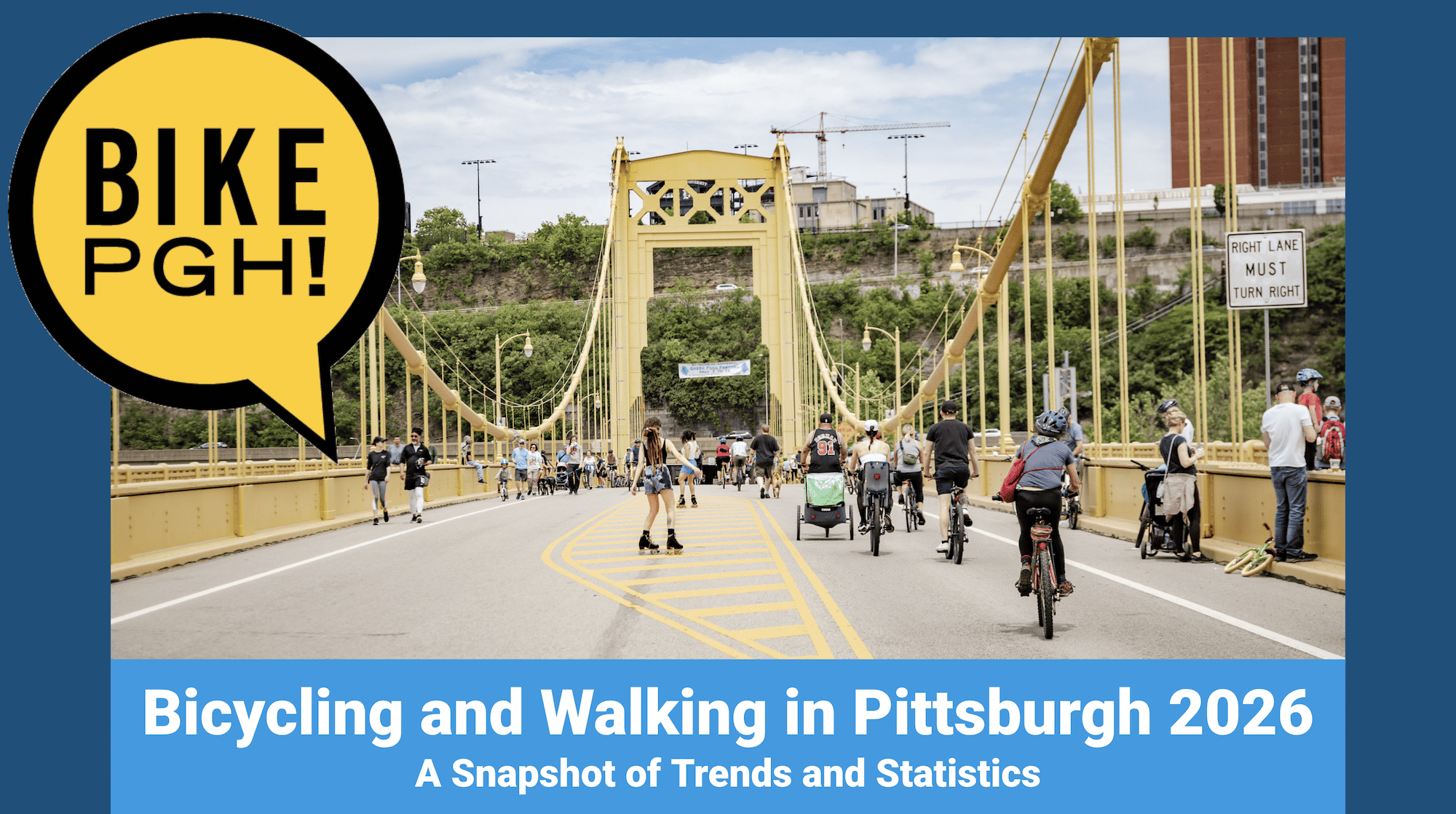
Also: Our Latest Report offers a snapshot of Bicycling & Walking Trends, Stats, and Progress
What’s inside:
A new mayor provides a chance to try new approaches to the same problems. Also, each new administration can build on the accomplishments of their predecessors to continue the momentum of what’s working and improving people’s lives.
How Pittsburgh designs its streets and neighborhoods is one of the clearest signs of what kind of city we want to be. Street design and land-use determine whether children can travel independently to school, whether older Pittsburghers feel safe crossing the street, whether neighborhood businesses flourish, and whether daily life requires a car for every trip.
Most importantly, the design of our streets and neighborhoods can save lives and prevent serious injuries. Too many Pittsburghers’ lives are upended and torn apart after a life-shattering crash. But there is reason for optimism, and more than a decade of rooting Pittsburgh’s transportation policies and investments in safety and connectivity for people walking and biking have made tangible improvements for Pittsburghers and visitors alike.
These choices have saved lives, improved neighborhood vitality, and helped reposition Pittsburgh as a modern city. This progress happened because successive administrations made deliberate policy and investment decisions to put safety and people first.
At a time when the City faces real financial constraints, it may be tempting to see street safety as something that can be deferred. That would be a mistake. Safe streets are not a luxury. They are basic public infrastructure. They support economic growth, reduce public safety costs, and make Pittsburgh a city where people want to stay and raise families.
With clear leadership from Mayor O’Connor, Pittsburgh can recommit to the values that have guided the last two decades of progress and accelerate implementation where it matters most. BikePGH looks forward to working with the O’Connor administration to save lives, strengthen neighborhoods, and ensure Pittsburgh’s streets work for everyone.
BikePGH’s 2026 policy recommendations build on this forward momentum, and align closely with Mayor O’Connor’s pro-growth, family-oriented vision for the city. These recommendations show how continued leadership on Complete Streets, Vision Zero, Safe Routes to School, and active transportation can deliver results that Pittsburghers care about.
BikePGH’s 10 Policy Goals for the new Administration
- Recommit to Vision Zero and Achieve National Recognition in 2026
- Maintain or Increase Investment in Complete Streets and Vision Zero
- Update Pittsburgh’s 2016 Complete Streets Policy
- Accelerate Implementation of the 2020 City of Pittsburgh Bike(+) Plan
- Update Goals and Accelerate implementation of the 2020 Pedestrian Safety Action Plan
- Implement the 2013 Allegheny Riverfront Green Boulevard Plan
- Establish a Comprehensive Citywide Safe Routes to School Infrastructure and Programming Action Plan
- Advocate for Better State-level Active Mobility Policy and Increased Funding
- Reform Zoning to Support Walkable, Bikeable Neighborhoods
- Strengthen City Fleet Safety and Compatibility
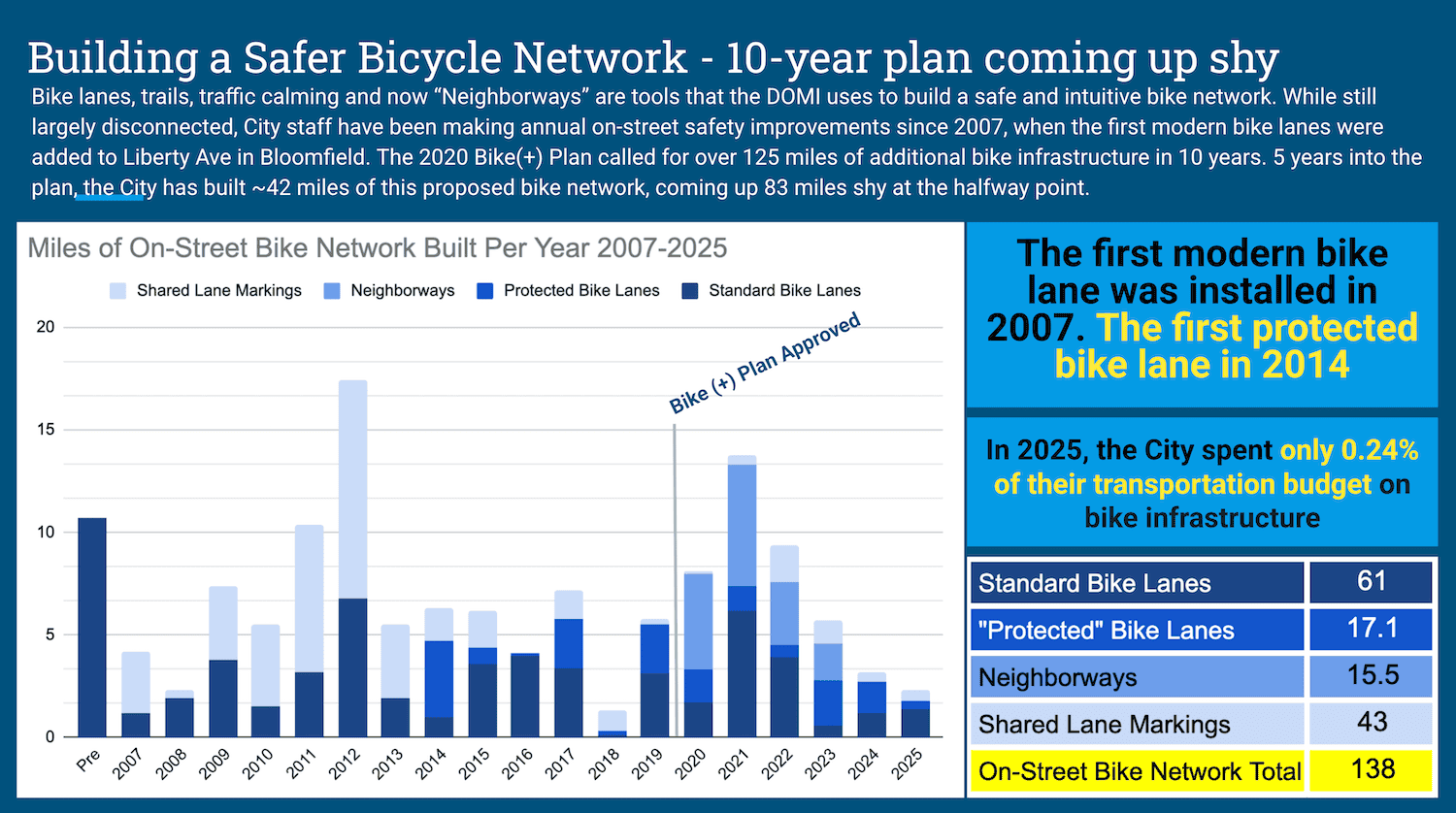
Bicycling and Walking – A Snapshot of Trends and Statistics
Also included in the post is our latest Snapshot of Biking and Walking Trends and Statistics. This document compiles notable trends and statistics from a variety of studies and surveys from national and local sources into one place. From miles of bike lanes per year, to case studies of infrastructure projects, we hope that with this document, decision-makers, journalists, advocates, and the general public will have a better sense of not only the urgency of improving our bike and pedestrian networks, but also the popularity of these investments that enable Pittsburghers to live without being dependent on a motor vehicle.
 NEWSLETTER