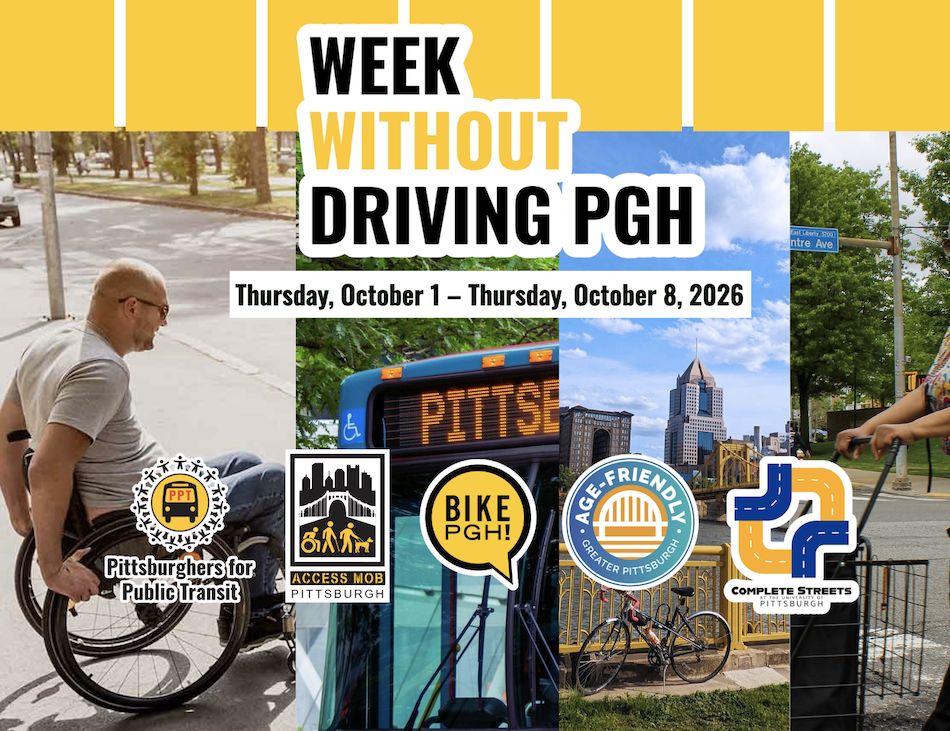
Co-hosted by BikePGH, Pittsburghers for Public Transit, Access Mob Pittsburgh, Age-Friendly Greater Pittsburgh, and Complete Streets at Pitt, along with dozens of community partners across the region
For nearly 30% of Allegheny County residents, owning and operating a car is simply not an option. Older adults, people with disabilities, young people, those who can’t afford the high cost of car ownership, and lifelong non-drivers rely on walking, biking, rolling, and public transit to get where they need to go. And yet, our region’s transportation systems are largely built around the assumption that everyone can and does drive.
However, building a transportation system that works for everyone means designing communities around this simple principle: Everyone deserves to move freely, safely, and affordably, regardless of income, ability, or how they get around.
Week Without Driving PGH asks us to experience what its like when driving is not an option
When public transit routes are infrequent or nonexistent, sidewalks are missing or unsafe, and bike infrastructure is disconnected, nondrivers are left with much higher barriers to access vital things like healthcare, jobs, food, and basic amenities.
In this context, we’re asking who gets to experience convenience, access, and opportunity vs. who doesn’t, and why?
That’s also why it’s important that we are welcoming elected officials from across Allegheny County to participate with us.
This year’s Week Without Driving PGH currently has support from Allegheny County Executive Sara Innamorato, PA Secretary of Health Dr. Deborah Bogen, Executive Director of the Governor’s Advisory Commission on People with Disabilities Dr. Josie Badger, as well as several other elected officials in Allegheny County Government, City of Pittsburgh, and Allegheny County Municipalities, and we thank them for their support.
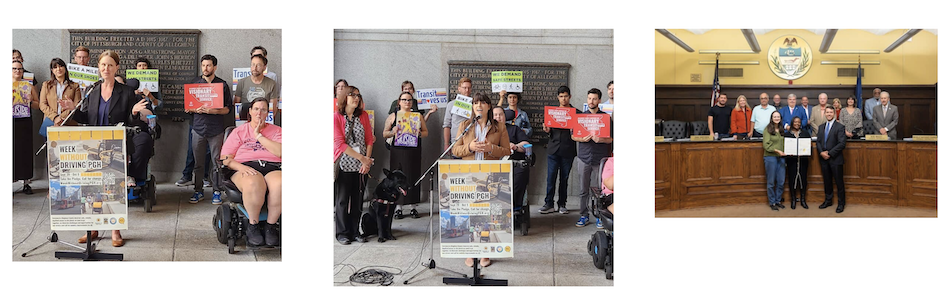
This matters because when people in positions of power, like planners, elected officials, and residents with decision-making influence, have the opportunity to experience what it’s like to navigate our streets without a car, then the conversation shifts into action. We can then work together to address the question of how can we build a system that doesn’t force people to drive in order to thrive?
To us, it means:
- Funding transit equitably, with attention to frequency, reliability, and coverage beyond Pittsburgh’s city limits
- Investing in sidewalks, accessible infrastructure, traffic-calming, and safer bike connections
- Rethinking zoning and development so that people can live near jobs, schools, and services without relying on a car
- Centering the voices of non-drivers in every conversation about transportation policy and planning
Whether you’re a lifelong non-driver or someone trying out car-free life for the first time, Week Without Driving PGH calls on us all to look around and ask: Who is this street designed for? Who is left out? And what needs to change?
We’re asking you to give up driving for a week, tell your stories, and start understanding the needs of our neighbors who don’t or can’t drive in Allegheny County
Walking, biking, and public transit are essential to everyday life for nearly one third of people in Allegheny County, including older adults, young people, people with disabilities, and those who cannot afford the high costs of car ownership. Yet the barriers they face to move safely, reliably, and freely are often invisible to many neighbors and decision-makers.
Week Without Driving PGH wants to change that. This growing national movement encourages people to commit to not driving for the week to see what it’s like to navigate our streets without driving. Week Without Driving highlights that we really need to listen to those who navigate life without a car as we work together to build systems that serve us all… Because until everyone can move freely, none of us are truly free.
Here’s how to participate
Step 1: Take the Week Without Driving pledge: Participate in WWDPGH as an individual, organization or elected leader, and invite other folks to sign on here.
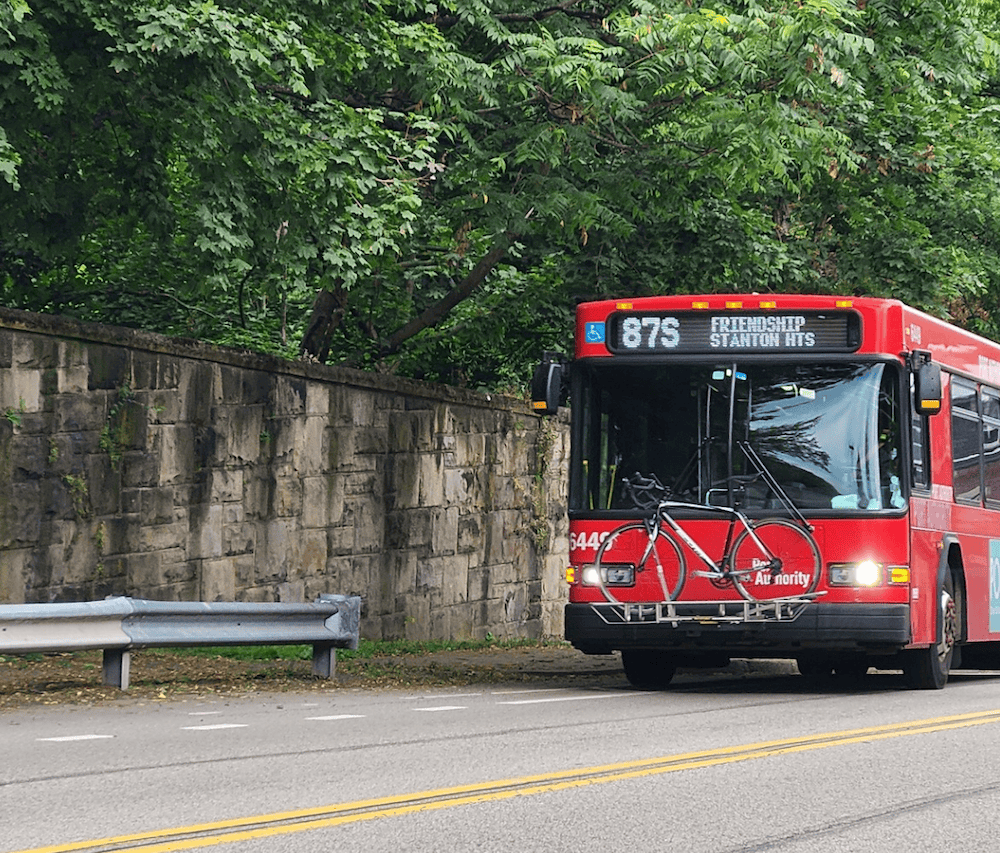
Step 2: Commit to not driving for the week. You can still carpool, ride transit, bike, walk, or use paratransit, just don’t get behind the wheel. Instead, bike to your errands, walk to a café, and catch the bus or T to work. Use this time to reconnect with your surroundings and see what’s easy and what’s difficult about the experience.
Step 3: Tell us your experience! What surprised you, or frustrated you? Whose stories do we need to hear more of? If you had a particularly hard time, consider getting involved in advocacy to bring better mobility to your community.
Step 4: Contact your elected leaders. Your voice helps push for the sidewalks, transit funding, bus stops, bike lanes, and infrastructure improvements our region deserves.
Join us at events all week
Week Without Driving PGH is from October 1 – 8, 2026, with a full lineup of events focused on safer sidewalks, accessible transportation, and real-world experiences getting around Pittsburgh without a car.
Highlights include the October 1 press conference, Safe Sidewalks Crew events, and the October 9 Multimodal Transportation Challenge, where teams will walk, bike, and ride transit head-to-head to compare how Pittsburgh’s transportation network really works.
 NEWSLETTER