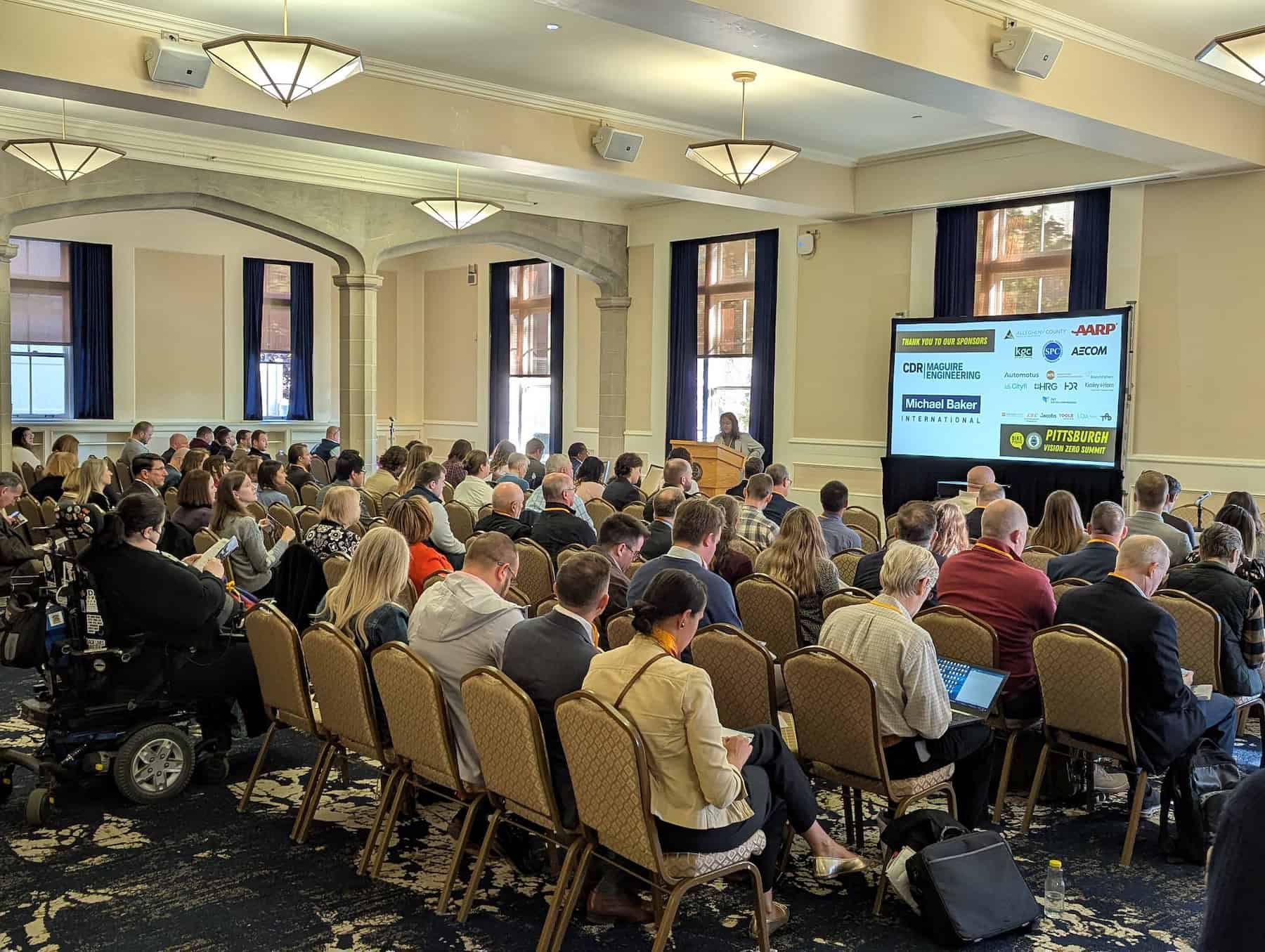
Sold-out conference showed why working together across sectors is crucial to achieving zero traffic fatalities on our streets
On Friday, October 17, BikePGH and the City of Pittsburgh co-hosted the City’s first-ever Vision Zero Summit. Thank you to everyone who attended and supported this groundbreaking event to help further our work of saving lives on Pittsburgh’s streets and roadways!
In March of 2024, Mayor Gainey committed to Vision Zero, providing the framework and goal to make the necessary changes in both Pittsburgh’s built environment and city processes. Allegheny County and SPC are working on a Vision Zero Action Plan for the county, and there’s still plenty of work to do as we make our local and regional efforts to achieve zero traffic deaths on our roadways.
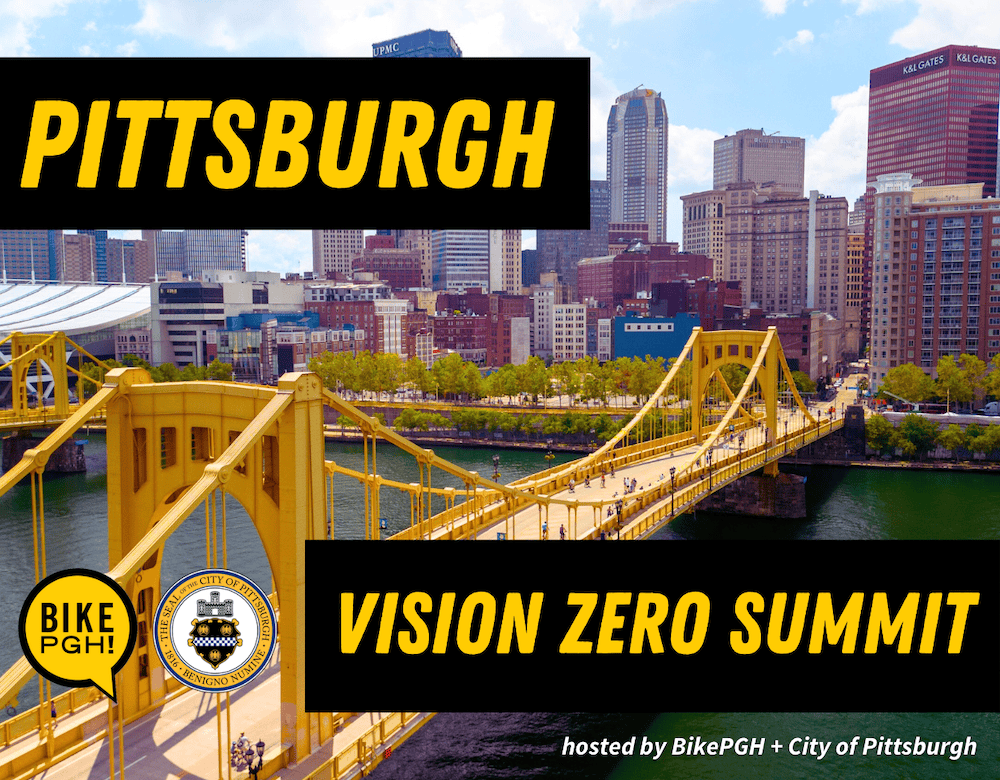
The Vision Zero Summit, which brought together local leaders, advocates, engineers and agencies in the transportation sector, aimed to supercharge the momentum of the City of Pittsburgh’s commitment to eliminating roadway fatalities and serious injuries, and to make sure we all incorporate these goals into our daily work.
Summit planning team members from BikePGH, DOMI, and the Mayor’s Office, convened key representatives from across the spectrum of transportation planning, advocacy, and public safety to discuss key issues that will further the collective goal of achieving Vision Zero in Pittsburgh.
Attendees continuously used three words to describe the Summit: Energizing, motivating, and collaborative… and this is only just the beginning!
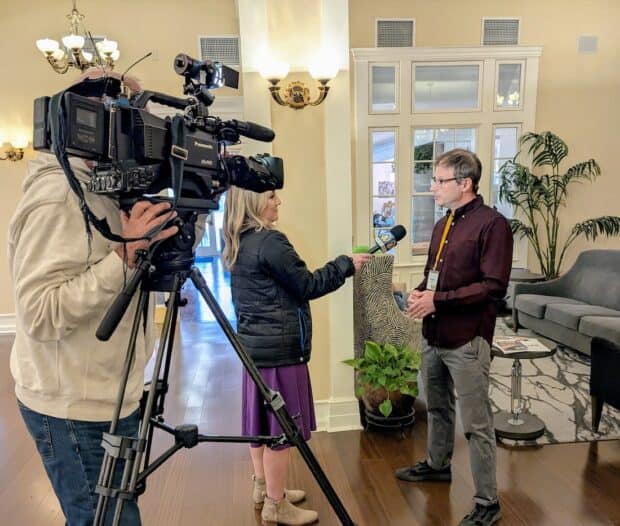
Thank you also to the media personnel who attended and covered the event:
The Room Where It Happens
The summit provided a forum to educate attendees about the principles of Vision Zero, inform them of what progress has been made toward this goal, and to create opportunities for collaboration and relationship building to expand the reach of this work in the region.
Roadway design is only part of the solution. Dangerous behaviors—speeding, distracted driving, and impaired driving—remain major contributors to serious and fatal crashes as well. Like every other sector, we must break down silos to meet today’s needs with good policy and an achievable goal.

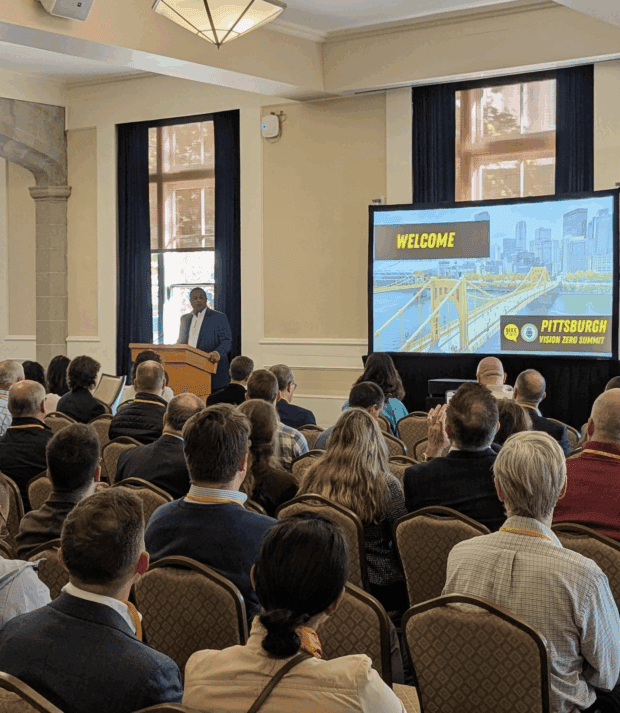
In addition to Keynote Speaker Claudia Adriazola-Steil, featured speakers included Mayor Ed Gainey, Allegheny County Executive Sara Innamorato, State Representative Lindsay Powell, State Senator Lindsey M. Williams, City Councilmember Barb Warwick, City Councilmember Erika Strassburger, Scott Bricker- Executive Director of BikePGH, Lauren Connelly – Director of Allegheny County Economic Development, and many other talented leaders and professionals.
Thanks to a partnership with the American Society of Highway Engineers (ASHE) – Pittsburgh chapter, the Vision Zero Summit was also an opportunity for licensed Professional Engineers to get their annual Professional Development Hours. Professional Engineers (PE) were able to receive up to five (5) credits, which are needed to maintain a PE license and stay current with advancements in their field.
Pittsburgh’s Vision Zero work is exemplary – and it has only just begun.
Our three plenary panels covered Vision Zero from a global perspective, what’s happening at the State level, and closed out with what the future holds for Vision Zero in Pittsburgh.
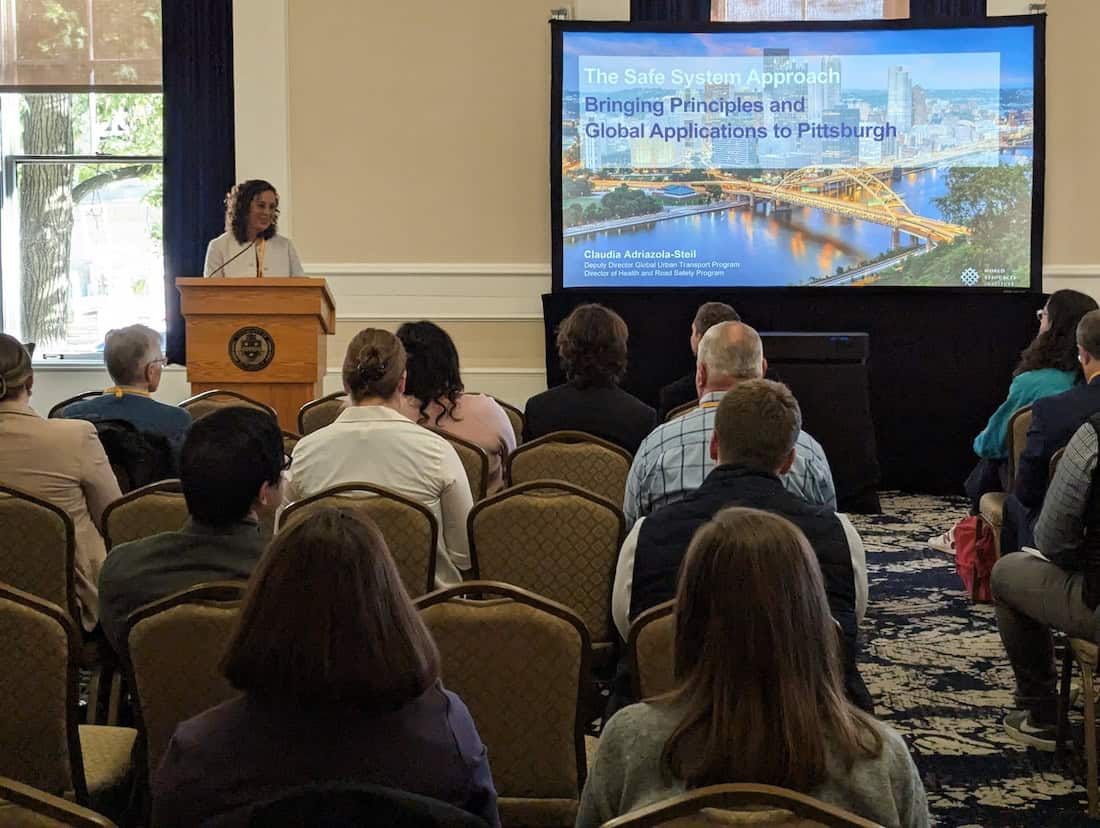
Keynote Speaker Claudia Adriazola-Steil, Director of the World Resources Institute, was able to put Vision Zero efforts into global perspective as she covered The Safe System Approach: Bringing Principles and Global Applications to Pittsburgh.
Pittsburgh is becoming part of a global movement to protect life on the roads. Keynote Speaker Claudia Adriazola-Steil joined us to share about her expertise in sustainable, multimodal transportation. As a leading expert in the safe system approach, Claudia shared principles and application on a global level, followed by a Q&A moderated by BikePGH Executive Director Scott Bricker to help ground these concepts locally and set the stage for the rest of the day.
“The work Pittsburgh is doing is one of the examples that I will be using a lot.” – Claudia Adriazola-Steil
Over lunch, the session How the State Shapes the City featured DOMI’s Assistant Director Angie Martinez facilitating a conversation with State Senator Lindsey Williams (PA-38), State Representative (PA-21) Lindsay Powell, and Ngani Ndimbie, the Executive Policy Specialist PennDOT Central Office. This was a wonderful panel of all-women leaders in the field sharing their knowledge and experiences.

While transportation departments set policies, guidelines, and procedures, it is the legislative branch that sets the laws. This session explored the critical role of state and local government in enabling DOMI, PennDOT, and others to deliver a safe, efficient, and equitable transportation system. From parking protected bike lanes, to expanding enforcement tools, to securing funding, our panel will offer an inside look at the process, priorities, and politics of the Commonwealth—and what they mean for Pittsburgh’s Vision Zero commitment.
The day wrapped up with What’s Next: The Future of Vision Zero.
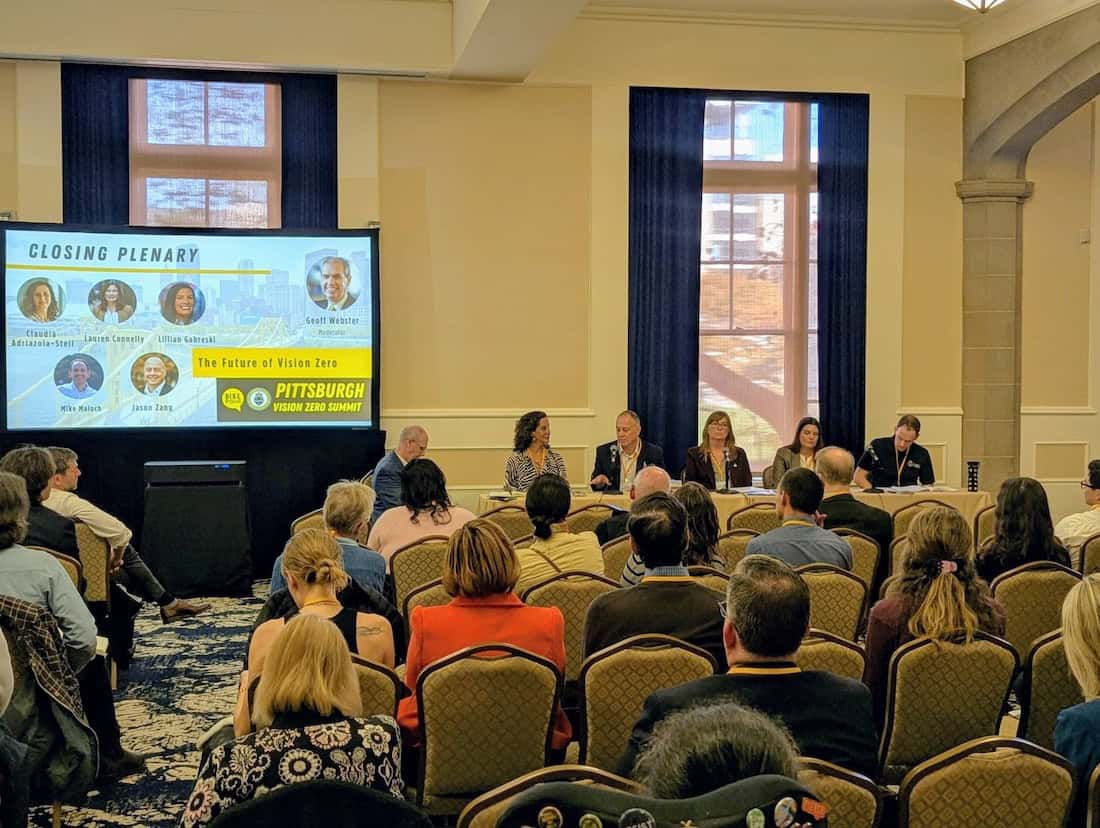
The closing plenary session convened leaders from across our transportation ecosystem, along with Keynote Speaker Claudia Adriazola-Steil, to share their insights and candidly discuss what they think it will take for the City and region to chart a realistic path towards Vision Zero over the next 10 – 20 years. Moderated by Geoff Webster of the Pittsburgh Futures Collaborative, panelists demonstrated how with leadership, vision, systems, and a dedication to breaking down silos, the path to zero harm is achievable.
“We really have all the people and all the resources we need in the room to achieve Vision Zero. We just need people to work together in a different way and really understand how systems work together to achieve that goal,” – Geoff Webster, Pittsburgh Futures Collaborative. Learn more about Pittsburgh Futures Collaborative and connect with them here.
PennDOT, the state agency that oversees all public transportation issues in Pennsylvania, has an enormous responsibility to be active participants at the table as we work toward Vision Zero as a city, county and region. We must acknowledge the harrowing fact that PennDOT’s roads remain the most dangerous for everyone, including vulnerable road users, and that there has been a high level of uncertainty surrounding their commitment to protecting people on the roads they own, especially when that pits safety interventions against traffic volumes and speeds and the possibility that these additional safety measures might increase congestion.
During the Summit, PennDOT’s comments still showed their apprehension to commit to anything in particular in the off chance that focusing on safety could “break things even more.” But in the end, they at least seemed willing to come to the table for future conversations around speed setting and safety countermeasures on their roads.
After the Summit, we’re hopeful that PennDOT’s participation has sparked some ideas they can pursue in District 11 as we turn to the next phase of Vision Zero locally.
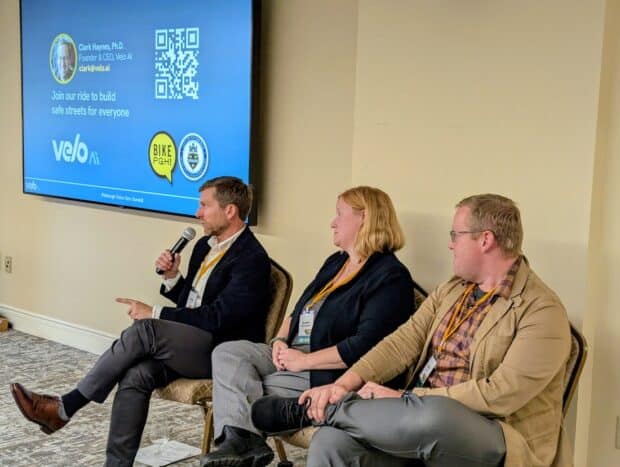
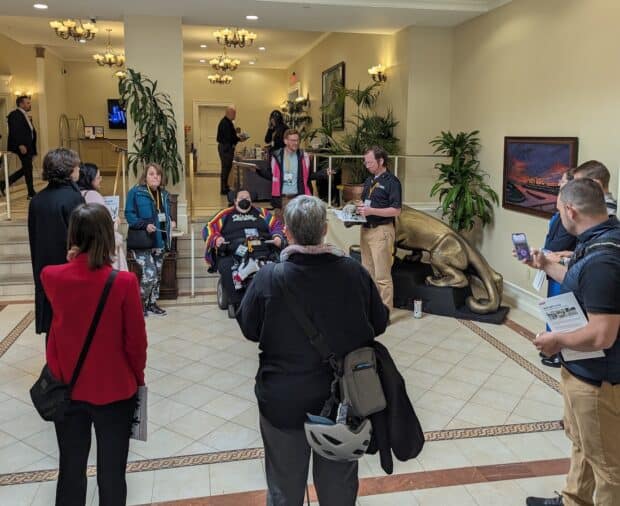

Breakout sessions were also full of inspiring conversations across sectors. Thank you to those who led these thoughtful Breakout Sessions:
- State of Vision Zero & Safety in the Southwestern Pennsylvania Region
- Working with the Community to get things done
- The Role of Curb Management & Automated Enforcement in Vision Zero
- Pittsburgh Fatal Crash Response Team
- Let’s go for a Walk (Audit)!
- Vision Zero as a Public Safety Issue
- Introducing PennSTART: Pennsylvania Safety Transportation and Research Track
- Liberty Ave HSIP: A corridor case study in signal modernization, lane repurposing & safer crossings
Some thought-provoking insights from the day
“What if we viewed DOMI as a Public Safety Department? What if we saw saving lives on our roadways just as important as saving people from heart attacks?” – Chief Lisa Frank, Chief Operating and Administrative Officer, City of Pittsburgh.
“People might ask why me, as a medical doctor, what do I have to do with public safety? Well, I see what happens to people [getting injured and killed] and I want to prevent it… let’s build the changes that need to happen to protect people and then track the improvements.” – Leonard Weiss, MD – Medical Director, City of Pittsburgh Dept. of Public Safety
“I really want disability to be more of a centered focus in the conversation, because if you build it for disabled people, everyone can use it.” – Alisa Grishman, Founder, Access Mob Pittsburgh. Alisa’s insights were extremely valuable from the disability rights perspective, as she explained that too often, our disabled neighbors are left out of the conversation– even right here at the VZ Summit. We look forward to further strategizing with Alisa on how we can make disability a larger focus of safe streets conversations.
“When it comes to Public Safety and DOMI, it’s about respect, team work, & collaboration. It’s also about educating each other. I don’t always know why DOMI is choosing to do something, but DOMI will explain to me and ask me what we think…. We are all here to make the City of Pittsburgh roadways a safer place.” – Takeena C. White, Assistant Director of Public Safety, City of Pittsburgh.
When asked what’s one thing that can help us reach Vision Zero tomorrow: “Don’t be a jagoff” – Lee Schmidt, Director of Public Safety, City of Pittsburgh.
We were also fortunate to have a wealth of historical knowledge in the room, from people who have been working on improving our city for decades and who have seen how far we’ve come. As one attendee remarked, “Years ago, I would have said Vision Zero? That can NEVER happen… but after today’s summit, I can now say… we can DEFINITELY do it.”
That all goes to show, after a full day of connections and brainstorming, attendees left energized to bring this safe streets vision for all users into their work and daily lives.

Please be on the lookout for an even bigger and better Vision Zero Summit down the road!
Reaching zero road traffic fatalities demands coordination and collaboration across every sector. The Vision Zero Summit brought together transportation professionals, public safety officials, elected leaders, advocates, educators, and community members to take on this challenge together… If we can keep up this momentum, the future is bright for Vision Zero in Pittsburgh.
We couldn’t have pulled off the first Vision Zero Summit without the support of our generous sponsors– thank you!
 NEWSLETTER