


By Staff Contributor Catlyn Brooke, Events Manager, BikePGH
When I visited Morocco in February, my mind was fresh with ideas from the authors of Life After Cars, who we hosted in Pittsburgh a few weeks before during their book tour. The evening was filled with lively conversations about Superman as an advocate for safer streets, the freedom felt when you choose not to drive, and how “car brain” dehumanizes us all. (Seriously, if you haven’t read the book, you really should.)
After sleeping off the jetlag, letting the initial culture shock subside, and delighting in a bunch of mint tea, I started noticing real life examples of things the authors discussed in both their book and on their podcast.
Let’s set the scene!
In Morocco, many cities are made up of two sections. The medina (old town) is historic, protected by high walls, and filled with narrow and often car-free streets. The ville nouvelle (new town) is modern and French-built, with spacious boulevards, cafes, and Western amenities. As you can imagine, they each have a distinct feel and design.

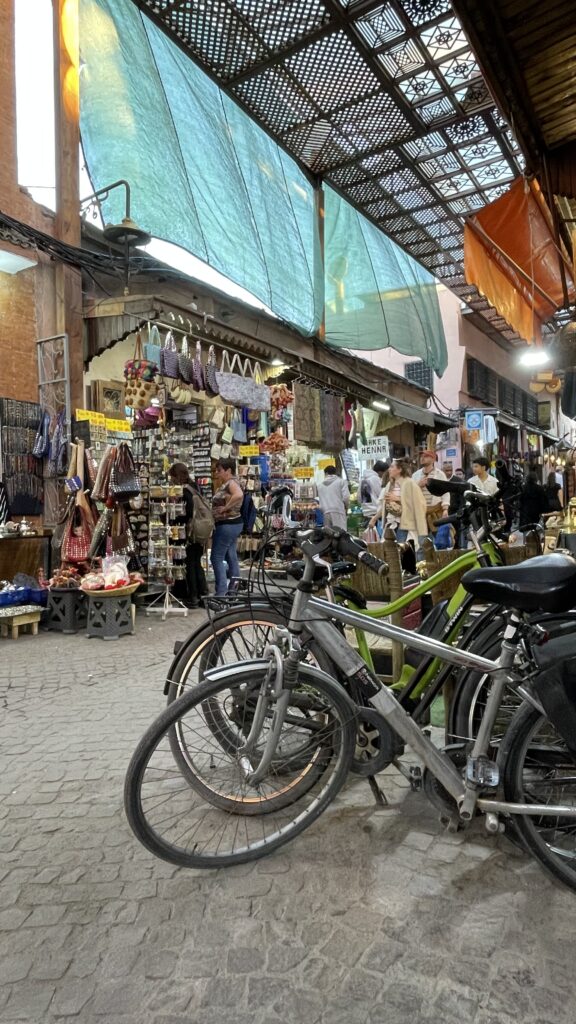
For two weeks, my partner and I stayed in and explored (got lost in) the medinas of Marrakech, Essaouira, and Fes.
We started our trip in Marrakech, the tourist capital of Morocco. The medina of Marrakech, known as The Red City, dates back to the 12th century and is ~1700 acres of (mostly) car-free streets and alleys. The Marrakesh medina features a large main square filled with vendors, pop-up food markets, and all sorts of entertainment. In Pittsburgh terms, picture the busiest areas of the Strip District (without cars) spanning the size of the entire East End from Shadyside through Bloomfield and into Lawrenceville.
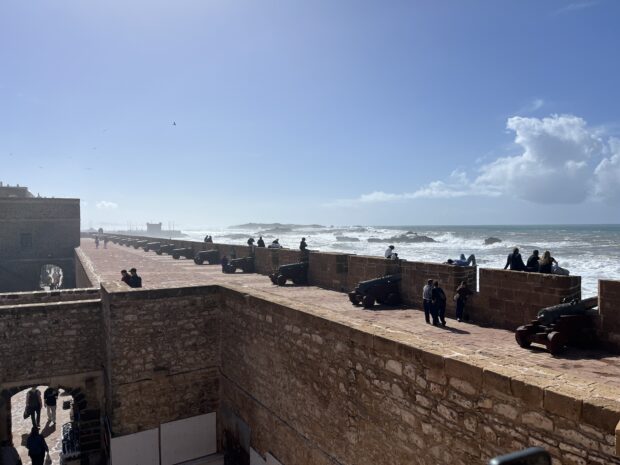
Next, we visited the smallest medina of our trip in the seaside town of Essaouira. This picturesque medina measures in at just 140 acres, or about the size of half of Schenley Plaza and Pitt’s central campus core. Essaouira’s medina was made famous in recent years when it was featured in Game of Thrones. Maybe you recognize it from season 3?
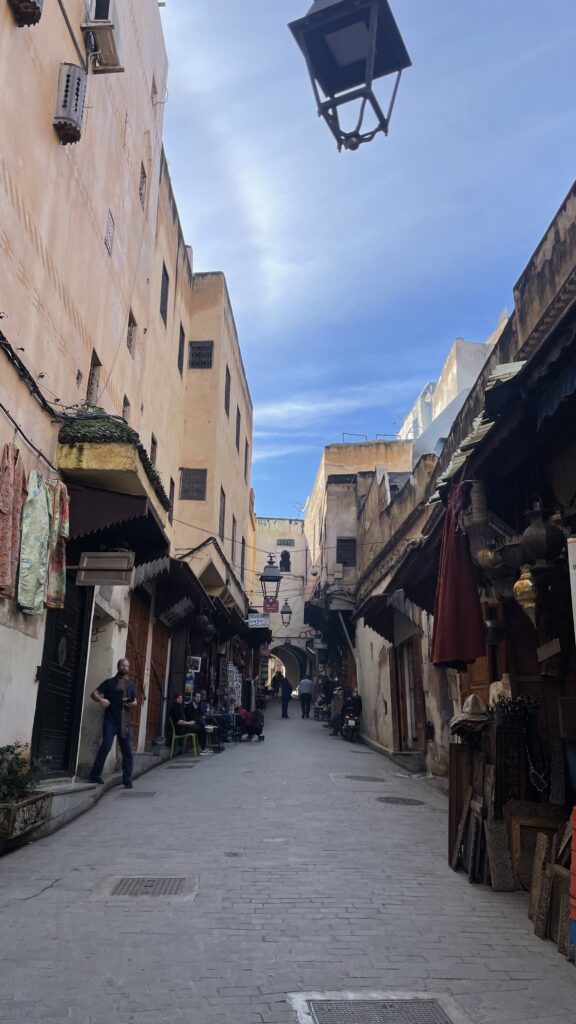
The last medina we visited was in Fes, Morocco’s oldest city. The medina of Fes is split into two parts dating back to the 8th and 12th centuries. These two sections make up the world’s largest car-free urban area, spanning 690 acres with over 9000 narrow streets and alleyways, and 400 neighborhoods. The medina of Fes is the size of all of Frick Park, Pittsburgh’s largest park, except every inch is buildings, alleys, and markets instead of woods. Imagining a car-free area the size of Frick Park provides a drastically different perspective of how space can be used in a city.
Try fitting a car down these streets and alleyways!


- Cities aren’t loud, cars are loud.
“From the other side of Fourteenth Street, which at a hundred feet wide has always been one of [New York] city’s busiest crosstown thoroughfares, you can hear a woman laughing with friends. You can hear the rise and fall of conversations among the chess players at the tables outside the subway entrance. You can hear the whir of a derailleur as someone rolls by on a bike. You can even hear the jingle of a collar as a dog gets taken on its lunchtime walk. What’s going on here? It’s actually pretty simple: They took away the cars.”
Life After Cars
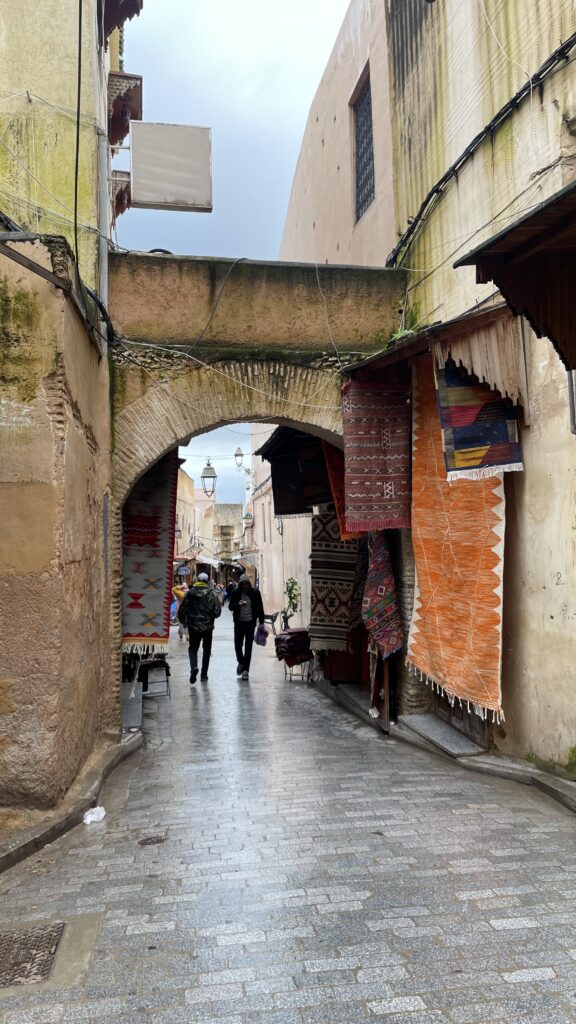
Not different from other cities around the world, the medinas of Morocco are hustling and bustling from early in the morning to late in the evening when the souks (markets) close for the night. It is by no means quiet, as the streets are filled with the sounds of roosters crowing, food sizzling in open air caFes, shop keepers negotiating with locals and tourists, music from radios and street performers, kids playing, babies crying, cats meowing, construction workers getting the job done. These are all normal sounds of a vibrant city, but with one noticeable difference: the sound of cars was absent. There are no horns blaring, engines idling, or the whipping sound of wind as cars speed past. Without the constant drone of cars, I was able to hear and appreciate so much more of what was happening around me. It wasn’t just the sights and smells of a new place and new people, but also being able to hear the sounds of daily living and conversations in a multitude of languages.
Without vehicles taking up so much physical space, the streets were able to be filled with people, families, friends, cats, horses, and construction donkeys. There was opportunity for more face to face communication and connection.




Once outside the walls of the medina, the new city felt the same as any car-filled urban area, confined to experiencing the city from the sidewalk. We heard engines and horns filling the streets, instead of the chatter of commerce and community. We could no longer hear the conversations in various languages, and it was even harder to hear the Muslim call to prayer despite its projection from many nearby mosques. Since tourism is one of the main economic drivers in Moroccan cities, the streets are filled with taxis, tour buses, and sprinter vans weaving in and out of traffic, honking and revving their engines to get their passengers where they are going quickly. The drivers and traffic were chaotic at best, and dangerous at worst. We unfortunately witnessed more than a few close calls as passengers, but also as pedestrians, reminding us that our bodies and minds are afforded a kind of slowness and calm in car-free spaces.
Experience a glimpse of what I am describing by playing the two videos below. 🔊 Sound on!
“Ghent [Belgium] is calm, yet lively, tranquil yet filled with pleasant sound. One resident went so far as to tell Filip Watteeuw he was ‘the best orchestral composer the city has ever had,’ because the noise created by excessive automobile traffic had been replaced by an urban symphony of people talking, bicycle gears cranking, and birds singing. It was a beautiful reminder that cities aren’t loud, cars are loud.”
Life After Cars
If you’re interested in learning more about road noise, and how it affects both wildlife and humans, check out this interview with Paul Donald, author of Traffication: How Cars Destroy Nature and What We Can Do About It.
- The medina: A patchwork of 15 Minute Cities
“A world in which walking is no longer stigmatized or dangerous; in which public transit is frequent and abundant; in which hopping on a bike to go to school or work or the grocery store is safe and easy. It’s a beautiful world. A quieter, […] happier world, where people are more likely to let their children roam free, to know and trust their neighbors, or to have spontaneous interactions with a friend they bump into on a sidewalk.”
Life After Cars
Within the walls of the medina there are many different neighborhoods, and in each you can generally find these 5 things: a mosque, a communal oven (ferran), a bathhouse (hammam), a school, and a public water fountain. As a bonus, more often than not there are small local markets and cafes. Since each of these neighborhoods is equipped with the majority of basic needs, being car-free in the medina is even more accessible. I concede that living in a very walkable neighborhood even with cars may feel like this as well, but there is a freedom and security that comes from having very few to no cars around and being able to take up more space than just the sidewalk.


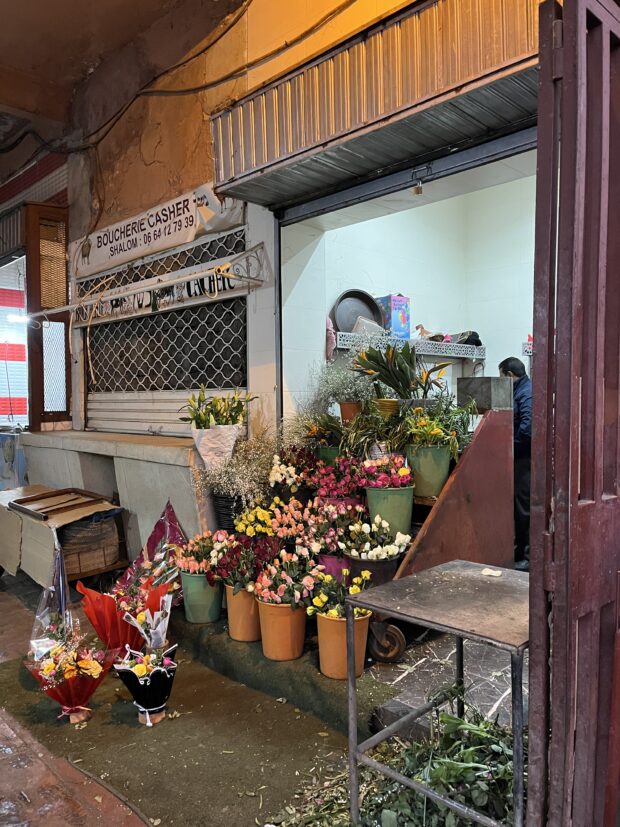

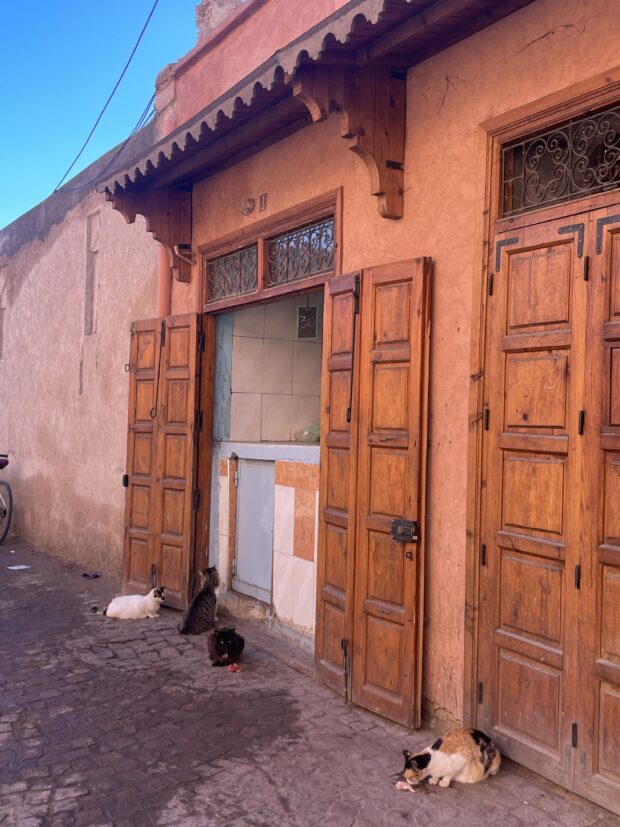

During our walking tours of both the medinas in Marrakech and in Fes, we experienced a taste of what it was like to be a local. Our tour guides introduced us to friends and we stopped to chat with them in the street, we visited caFes and shops to practice the art of haggling, and learned how to navigate the winding roads by the shape of the street signs.
Fun fact! Hexagonal signs generally mark a no-outlet street (derb), while square or rectangular signs indicate a through street. There is a reason that so many people opt for walking tours (bike tours, segue tours) while they are visiting a new place, not only because they likely don’t have a car with them on vacation, but also because being outside the walls of a car affords you so many more opportunities to make connections with the people around you and soak in your surroundings.
“Car traffic appears to erode, and in some cases destroy, the delicate human social environment. The more cars, the worse damage.”
Life After Cars
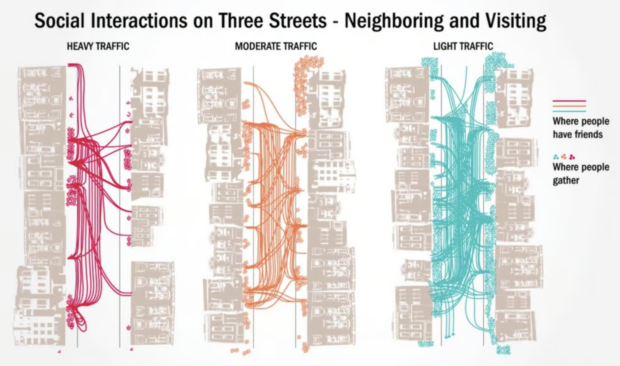
In a study by Donald Appleyard looking at streets with heavy, moderate, and light traffic, he found that residents living on a light traffic street had 3x as many local friends and 2x as many acquaintances compared to residents of heavy traffic streets. Additionally, he found that residents of light traffic streets identified their entire roadway and neighborhood as “home” instead of just their physical house, showing how much space we give up to vehicles in our environment.

Having the opportunity to experience other cultures, both modern and traditional, has opened my eyes to how we can better take care of each other and the various needs of individuals with the built environment around us.
A fellow BikePGH staff member offered this perspective: “We” think that our culture is the best culture [American/Westernized culture] when it actually reinforces inequities and division. We see so many other cultures around the globe who have preserved longstanding systems for caring for one another simply rooted in how land is used and prioritizing people connecting with people.
Visiting the medinas showed us what life looked like before cars, and that our communities can still carry on and thrive after cars when we prioritize connection, space, and streets for people.
“The fundamental discussion is the space in the city. To whom does that space belong? Does it belong to the people? Does it belong to the pedestrian and cyclist, or does it belong to the cars? That’s the real discussion. The democratic distribution of streets.”
Filip Watteeuw, Deputy Mayor of Ghent, Belgium
 NEWSLETTER