
Not all E-Bikes are the same. What makes one street legal…or not?
Over the past decade plus, e-bikes have given people a powerful tool to travel more efficiently, conquer hills and headwinds, carry cargo and passengers, and to ride despite some physical challenges. In hilly cities like Pittsburgh, an e-bike may make the difference on whether someone chooses to travel by bike or not. According to Pennsylvania law, riders of street legal e-bikes have the same rights and responsibilities as people on traditional bicycles, and can ride in many of the same places, as long as their vehicle conforms to the PA legal definition of “Pedalcycle with Electric Assist.”
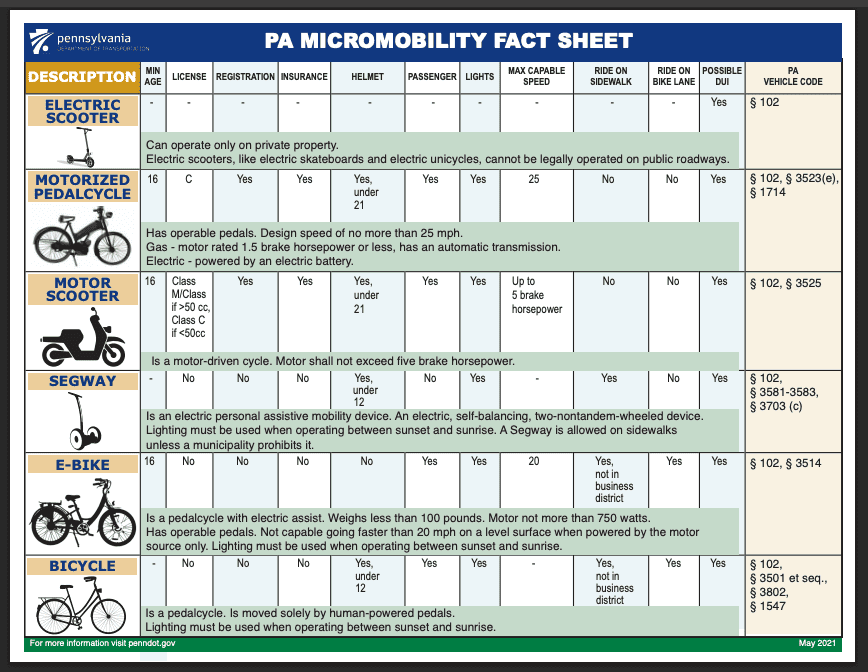
In Pennsylvania, an e-bike is legally defined by the PA Vehicle Code as a “pedalcycle with electric assist” that must meet all of the following:
- Has operable pedals
- Weighs not more than 100 lbs
- Has two or three wheels more than 11 inches in diameter
- Uses an electric motor of 750 watts or less
- Cannot exceed 20 mph on a level surface when powered by the motor source only
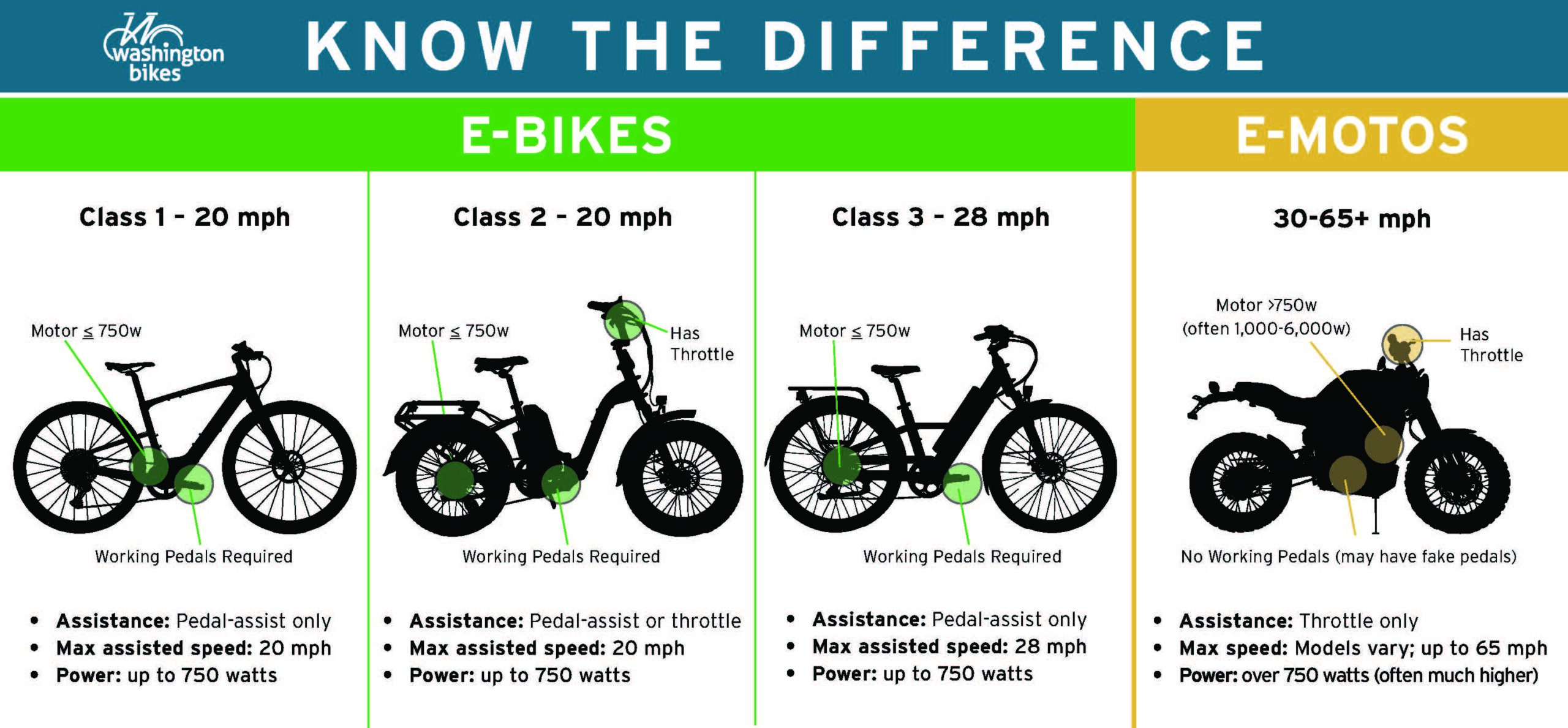
Although Pennsylvania law does not formally acknowledge the industry standard Three Class system of e-bikes as other states do, Class 1 and 2 e-bikes fit squarely within PA’s legal definition, so are treated the same as regular bicycles under law. However, because Class 3 e-bikes can exceed 20 mph with motor assist, they may not fulfill PA’s statutory definition of a legal e-bike. This could affect things such as insurance coverage in the event of a crash.
According to current state law, a rider of a legally recognized e-bike or regular bicycle may ride on public roads and bike lanes without needing a license, registration, or insurance, or be required to wear a helmet (unless under 12). One important difference is that e-bike riders must be sixteen or older. Right now, most multi-use trails allow e-bikes, but that determination is left up to the individual trail land managers, so it’s important to check the trail’s rules before riding.
Out-of-Class Electric Vehicles & E-Motos
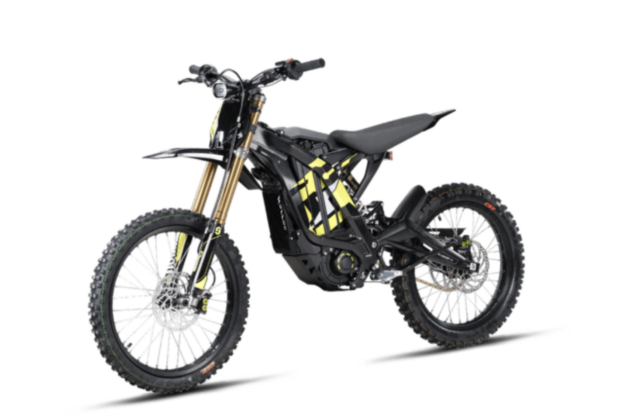
However, with the increased uptake and availability of battery-powered mobility devices, many imposter vehicles with increased power and speed have entered the market, riding the coattails of legal e-bikes onto roads and multi-use trails, putting both bicyclists and other road and trail users at risk. This risk was made shockingly clear last month when a rider of an out-of-class Teverun Blade e-scooter collided with a cyclist at high speed in New York City, killing them both.
Vehicles that do not fit the above legal definition of e-bikes, such as high-powered e-motos, e-scooters, and e-unicycles may be operating illegally on Pennsylvania roads as they don’t fit neatly into the vehicle definitions within the PA Vehicle Code and cannot be regulated as electric bicycles, mopeds, or motorcycles. Manufacturers and retailers often skirt responsibility by claiming their vehicles should only be used on private property while clearly advertising them for use on public roads and trails. Or, they may even provide a code to override the speed regulator after the customer takes the device home. But while regulation and enforcement against these vehicles has lagged, the danger mounts as more users purchase and ride illegal out-of-class vehicles on local roads and trails.
In light of this, some municipalities have proposed blanket bans against all e-bikes, seeking to throw the baby out with the bathwater, while also banning safe, legal, and responsibly used vehicles, despite existing laws against out-of-class vehicles not being enforced.
Making an Informed Decision
While we advocate for sensible regulation and enforcement to reign in dangerous and illegal vehicles, in the meantime, it is crucial for consumers to make informed choices when buying electric vehicles for themselves and their families and to know existing regulations about where they can and can not ride.
BikePGH’s E-Bike Guide is an excellent way to get informed, as is our article with tips on purchasing a new e-bike. Also check out this resource from educator Laura Lubecki that walks buyers through important questions when choosing an e-bike for a family member. As always, your local bike shop is an excellent resource when finding out what is and is not a street legal e-bike.
Note: any “e-bike” advertising itself as able to be easily switched into an “unrestricted mode” may not be a street legal vehicle in the first place.
A warm thanks to Piscitello Law, “Pennsylvania’s Bicycle & Pedestrian Crash Attorneys” for assistance on this article.
See the PennDOT latest version of PennDOT’s Micromobility factsheet here.
 NEWSLETTER