Approximately half of motorists caught traveling above speed limit
Death and loss can inspire a range of reactions: anger, sadness, questioning, and, sometimes, a commitment to bringing about a change.
On his daily bike ride to and from Oakland, Bloomfield resident, Matt Bauman experienced a nagging concern about his safety along Forbes Avenue. But after Susan Hicks was struck and killed by a car while riding her bicycle on Forbes Avenue in late October, that feeling of concern was replaced by a sense of urgent need.
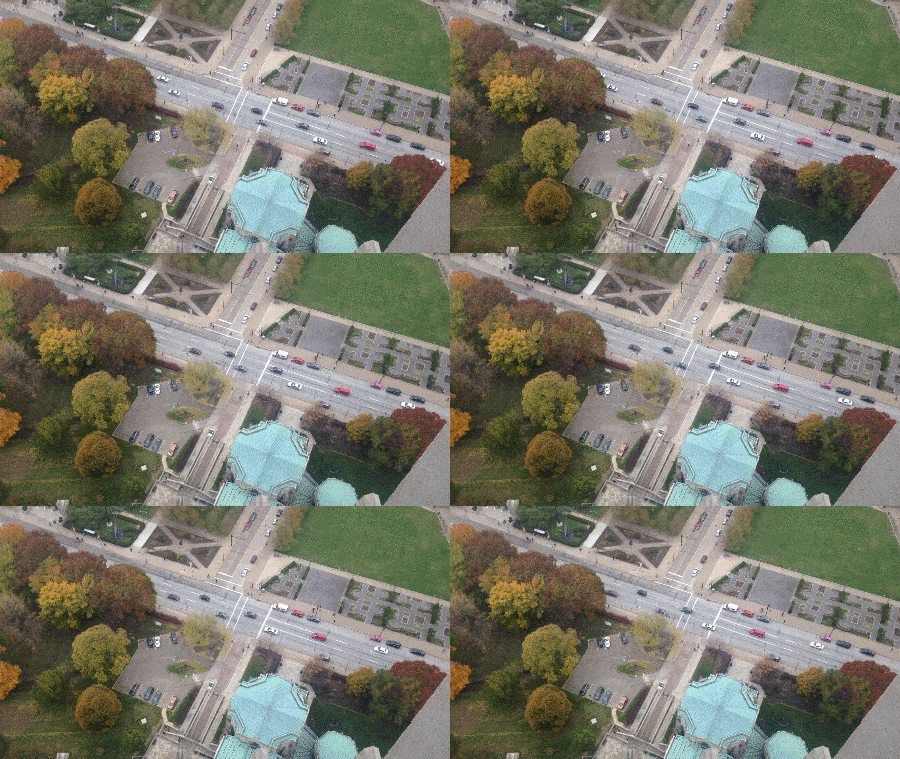
Without access to a radar gun or other sophisticated tools, Matt improvised. He trudged to the top of the Cathedral of Learning on Pitt’s campus and recorded 10 minutes of traffic on Forbes Avenue (at 3:15 on a Friday afternoon) on his cell phone. Using just the cell phone video, his computer, and open source software he was able to track the speeds of cars along Forbes Avenue.

From there he was able to isolate the max speeds of the vehicles.
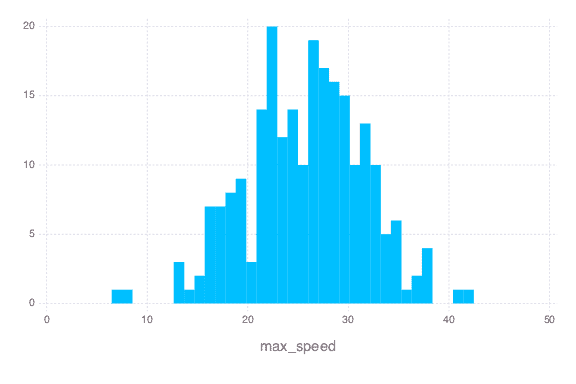
In just those 10 minutes, here are the maximum instantaneous speeds Matt saw:
Cars over 40mph: 2
Cars between 35-40mph: 12
Cars between 30-35mph: 49
So what’s the speed limit on Forbes Ave, you ask? 25 miles per hour. And here’s why: we live in a city and people are (expected to be) all over the damn place. Oakland is Pennsylvania’s third largest economic center (after Center City Philadelphia and Downtown Pittsburgh) and one of Pittsburgh’s most vibrant, bustling neighborhoods. Within just a 1 mile stretch, Forbes Ave carves through the center of both Pitt and Carnegie Mellon’s campuses.
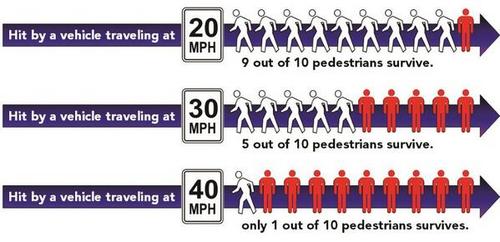
When cars are traveling at or attempting to reach speeds above 25 miles per hour they are much more likely to hit and kill pedestrians and bicyclists.
While we’re highly aware that more video should be shot and more data gathered this isn’t a statistically significant amount of information (edit: see comment by sgr below re: statistical significance of data), it’s a bit of proof of motorists speeding along Forbes that’s been gathered in an impressively scrappy way.
We will be working with Matt to gather more data in the coming weeks and will release it soon.
For more information about Matt, his methodology, and the change he hopes to see in in Oakland, read our short Q&A with this clever guy.
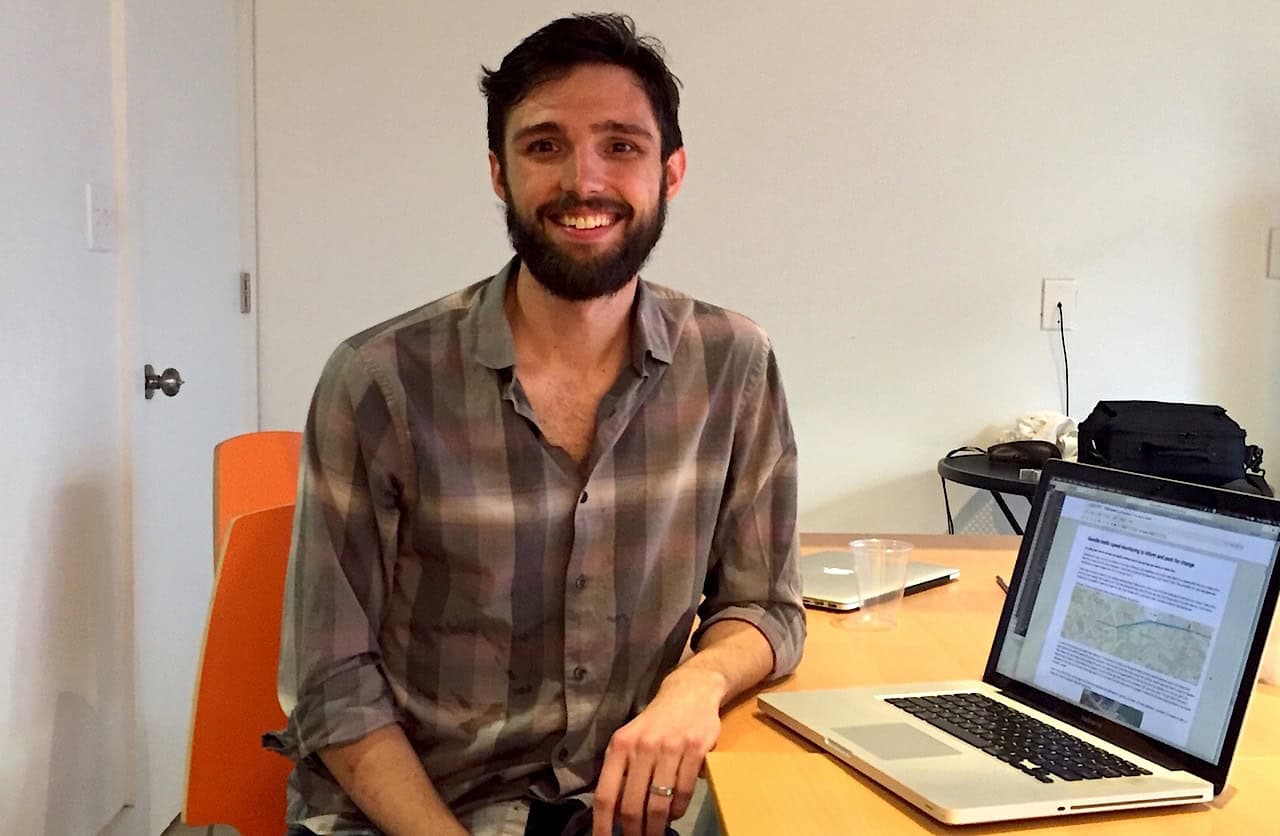
Matt Bauman is a PhD candidate in bioengineering at Pitt. ( i.e <—This isn’t even his field y’all.)
1. What prompted you to engage in this data collection?
I have bike commuted into Oakland all 5 years that I’ve lived in Pittsburgh and have often felt cars traveled too quickly given road conditions. Forbes has been a part of my commute for all of these years and so after Susan’s death I knew I wanted to help push for safer facilities. I got frustrated by the seeming pushback from Pitt and city officials on what they can do. They kept saying that their funding and ability to improve safety in the corridor was tied into BRT and was 1-2 years away at the earliest.
I felt that it was possible to slow speeds on Forbes Avenue now and knew that there have been conversations about calming traffic. But I had never seen proof that people were speeding, so I decided to investigate.
2. What was your methodology?
I don’t have a radar gun, but I thought that by taking a video of the street I’d be able to see cars and track how fast they were going.
I went to the top of the cathedral and propped up my phone and recorded 10 minutes of video of Forbes Avenue. I then did some basic processing to identify cars and each lane and then attach speeds.
The trickiest part was determining the scale for speed, but I solved that by measuring the distance between the wheels on the busses – a standard width – throughout the frame. By doing that I was about to get the space in real units.
3. How do you hope to help?
I think the first step in addressing a problem is identifying that there is a problem. The ability we have to collect this data is powerful and I hope to it will affect decision makers and policy makers.
4. What would a safer Fifth/Forbes mean to you?
It would mean a road that I could take home without worrying. Even if not dedicated space, lower speeds for car traffic. But dedicated lanes for bikes would be great.
5. Anything else to add?
I really find it incredible that we can gather this data ourselves. This is just a small proof of concept but I hope it can be taken and duplicated in Pittsburgh and elsewhere to make roads safer for everyone.
Also, this is not my field, it’s just something that I learned on the side. Experts will be able to take this on better than I can.
Take action for a safe Fifth/Forbes. There is an urgent need for safe spaces to bike in Oakland – the Fifth/Forbes corridor is deadly for cyclists. We need YOU to join our coalition to take action and help us transform the corridor.
 NEWSLETTER