
We’re making it easer for Pittsburghers to get involved in the decisions that directly affect them
If we’re being honest, a big part of the progress over the years needs to be attributed to the countless number of residents who have gotten involved in the movement for safe streets. Everything from showing up to public meetings to signing petitions to weighing in on a seemingly endless stream of surveys and planning efforts, shows the incredible support there is in Pittsburgh for making sure our streets are safe for all users.
The time and effort that Bike Pittsburgh puts in to distill plans & policies, as well as train & organize residents has created a culture of advocacy around the safe streets movement. This work makes it easy for residents to take part in the democratic process and has helped influence street designs, policy, and funding for safe streets projects. There is no cookie cutter method to demonstrate support for an issue, so we make sure to include an all-of-the-above approach.
While this push for Civic Engagement is a marathon, not a race, it has really paid off over time. One of the most striking examples is the change in crash stats over time. Not only have annual total crashes dropped below 3,000 for the first time in over 20 years, the life altering crashes that resulted in injury have seen a huge 41% drop since 2015.
Needless to say, providing support to the very people who are getting involved in shaping the streets around their homes may be one of the most powerful, and lasting, agents of change.
Check out a sample of how Bike Pittsburgh has activated residents to make change in their communities.

Physical Change
It’s important for us to activate our 4,000+ Members and 30k+ email subscribers to get involved in all sizes and forms of planning processes, from neighborhood traffic calming projects to the Pittsburgh Comprehensive Plan. One of the more recent and significant projects was inarguably the new Penn Ave bike lanes in the Strip, helping connect residents coming from the eastern neighborhoods to the Strip and Downtown. In the South Side, the hard fought S 18th St traffic calming (including a climbing lane) was installed halfway up the hill, with the second half expected in the Spring, once the utility work is complete. Over in Homewood, after a driver struck and killed 9-year-old Courtney Carter, we worked closely with The Promise Center to successfully push for much needed traffic calming and sidewalk improvements near this neighborhood hub as well as a stop sign at the scene of the tragedy. In Oakland, new bike lanes were installed on Pitt’s Campus after a spate of pedestrian fatalities activated a student-led traffic calming campaign. In all these cases, we helped community members understand, navigate, and ultimately have an impact on the processes that shaped these changes.
Building a Culture of Advocacy Through Workshops and Resources
Our Advocacy Team offers some of the most comprehensive training and dedicated support for Pittsburghers to learn about how to influence decision makers. From crafting effective grassroots campaigns for better infrastructure and policy, to understanding the wonky capital budget process, we dig into our decades of experience to help people understand how change actually happens, who can get things done, and how to influence them. These advocates learn how to tell their stories through the media and engage their neighbors on tricky issues. And we show that sometimes, neighbors can identify opportunities for change just by going for a walk. We regularly hear from people who participate in our training and coaching sessions about how they are applying the skills they learn from us to influence all sorts of civic issues outside the bike and pedestrian realm. Our comprehensive Resource Library and archive of our Workshops are used by not only our local network of advocates, but from changemakers around the country.

Resident-driven Bike/Ped Committees
For over a decade, we’ve been helping create and support a network of resident-driven Bike/Ped Committees to focus the energy of neighbors to make change within their communities. Sometimes these groups are affiliated with an existing neighborhood group or local government, sometimes they are independent, but putting a focus on traffic safety has brought concrete improvements and programs at the hyper local level. These groups advocate for new traffic calming, pedestrian and bike improvements and push to ensure that safe streets projects are well funded. For 2025, we welcomed 3 new Bike/Ped Committees in Friendship, Penn Hills, and Moon Township to this Advocacy Network.
Capital Budget and Funding
They say that if you want to understand the values of a Mayor, look at their Capital Budget. All mayors want safety, so we are sure to put effort into ensuring that safe streets projects are well funded. We’ve dedicated a significant amount of time and energy working closely with our core neighborhood advocates to understand and influence the City’s Capital Budget process. Our guide and annual training prepares advocates to attend public hearings, participate in surveys, and most importantly, maintain a close relationship with their City Councilperson to help recommend impactful projects. Capital Budget requests show that these types of projects are not only popular, but pay dividends in an improved quality of life and cost savings for the city.
Civic Calendar
For years, we’ve been maintaining a calendar of events that posts any and all transportation, planning and related events and public meetings to our online Civic Calendar. As far as we know, it’s the only one-stop-shop for getting involved in community efforts for safe streets. It’s often a challenge for project managers to get the word out about these meetings, so we try to make it as easy as possible for people to discover how they can stay involved in their community.
Everyone is a pedestrian
In 2024, we brought together a coalition of passionate residents and representatives from various organizations with constituencies that rely on walking, to form a coalition focused on pedestrian improvements. Pittsburgh Walks leads passionate volunteers to advocate for infrastructure, programs and policies to improve safety, accessibility, and enjoyment for people who walk in the City of Pittsburgh. Most recently, in a collaboration with Pittsburgh Walks, Access Mob Pittsburgh, and the Department of Mobility & Infrastructure (DOMI), we’ve organized volunteers to assess the quality of sidewalks in Pittsburgh using a mobile app. The collected data helps the City identify where sidewalks need to be improved or built, prioritize pedestrian infrastructure projects, and make the case for funding. Learn more and join the Safe Sidewalks Crew here!
Neighborhood Walks
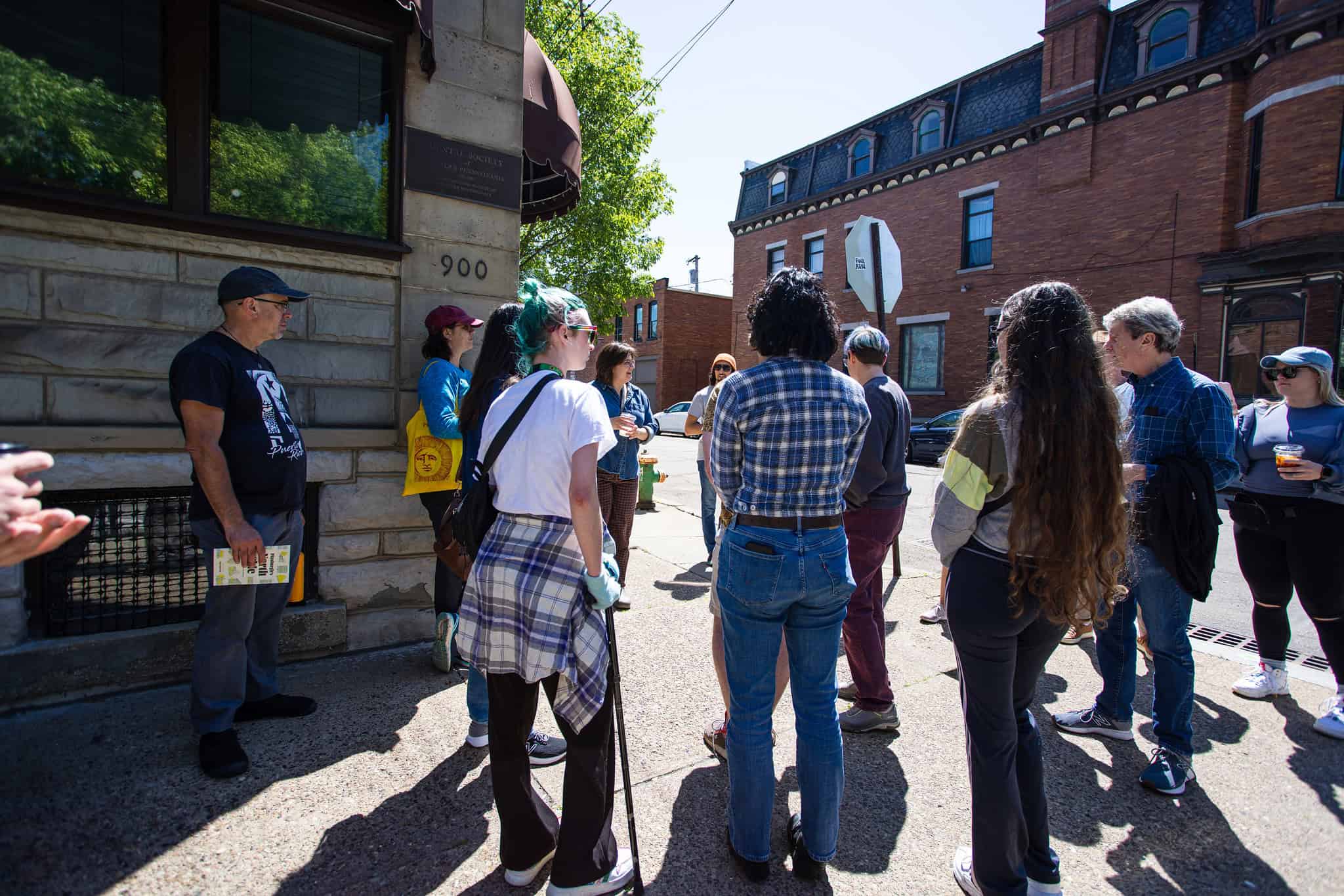
Sometimes the best way to get people activated and thinking about the change they’d like to see is to simply go for a walk. From the West End to Oakland, our Neighborhood Walks series has brought residents together to celebrate their neighborhoods and to spark conversations about pedestrian safety and improvements. Come spring, be sure to check in on our Civic Calendar to join a walk near you.
Surveys, Plans and more Surveys
With so much information crossing our desktops on a daily basis, it’s nearly impossible to pay attention to the myriad ways that planners and agencies are trying to collect information. From all levels of government, these surveys help capture local sentiment that informs projects, plans and policies. We also collect information for our own use, having recently launched and published results from our Street Harassment Survey to better understand the unique struggles of women and non-binary bike riders in Pittsburgh. We help facilitate these direct interactions with the public and our civically engaged membership at our events like OpenStreetsPGH, online, and at public meetings.
The Kids are the Future
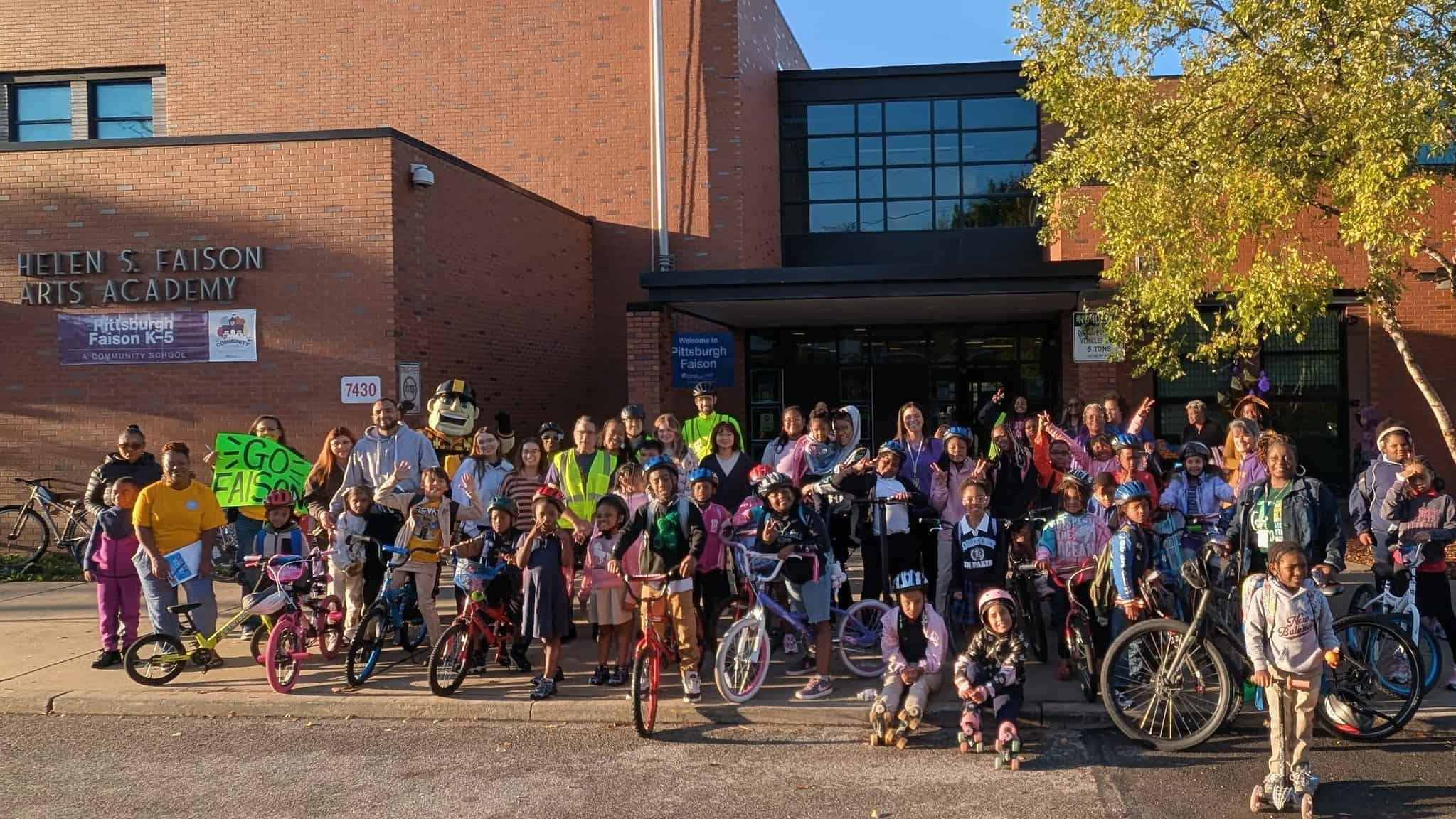
We’re really proud of our youth programming. There is no better way to tell how important biking and walking is than to show schools the transformative power of bikes. We’re helping students bike and walk to school with our Bike-Bus How to Guide as well as partnering with the City on Walk and Roll to School Days every year. We’re also partnering with local schools to bring bike education into the classroom to create the next generation of advocates for safe streets.
Bike People Outreach Team
Community Outreach Associates, also known as Bike People, create a unique collaboration between BikePGH and Bike Share Pittsburgh (POGOH). Our “Bike People” outreach team directly engages with residents throughout the city to inform Pittsburghers about our work as well as hear neighborhood perspectives on safe streets. We’re actually hiring for the 2026 season now.
Connecting residents to planners to decision makers
2025 culminated with the sold-out Vision Zero Summit, a first-ever conference in Pittsburgh, co-hosted by BikePGH and the City of Pittsburgh. We brought together nearly 200 public and private sector planners and engineers, residents and advocates in Oakland to discuss the push to eliminate road traffic fatalities and serious injuries, and how we’re going to achieve this goal. Attendees continuously used three words to describe the Summit: Energizing, motivating, and collaborative. Directly bringing together the public with the people who are making the decisions about our built environment ensures that the voices of people outside of motor vehicles are heard.
Amplifying resident concerns
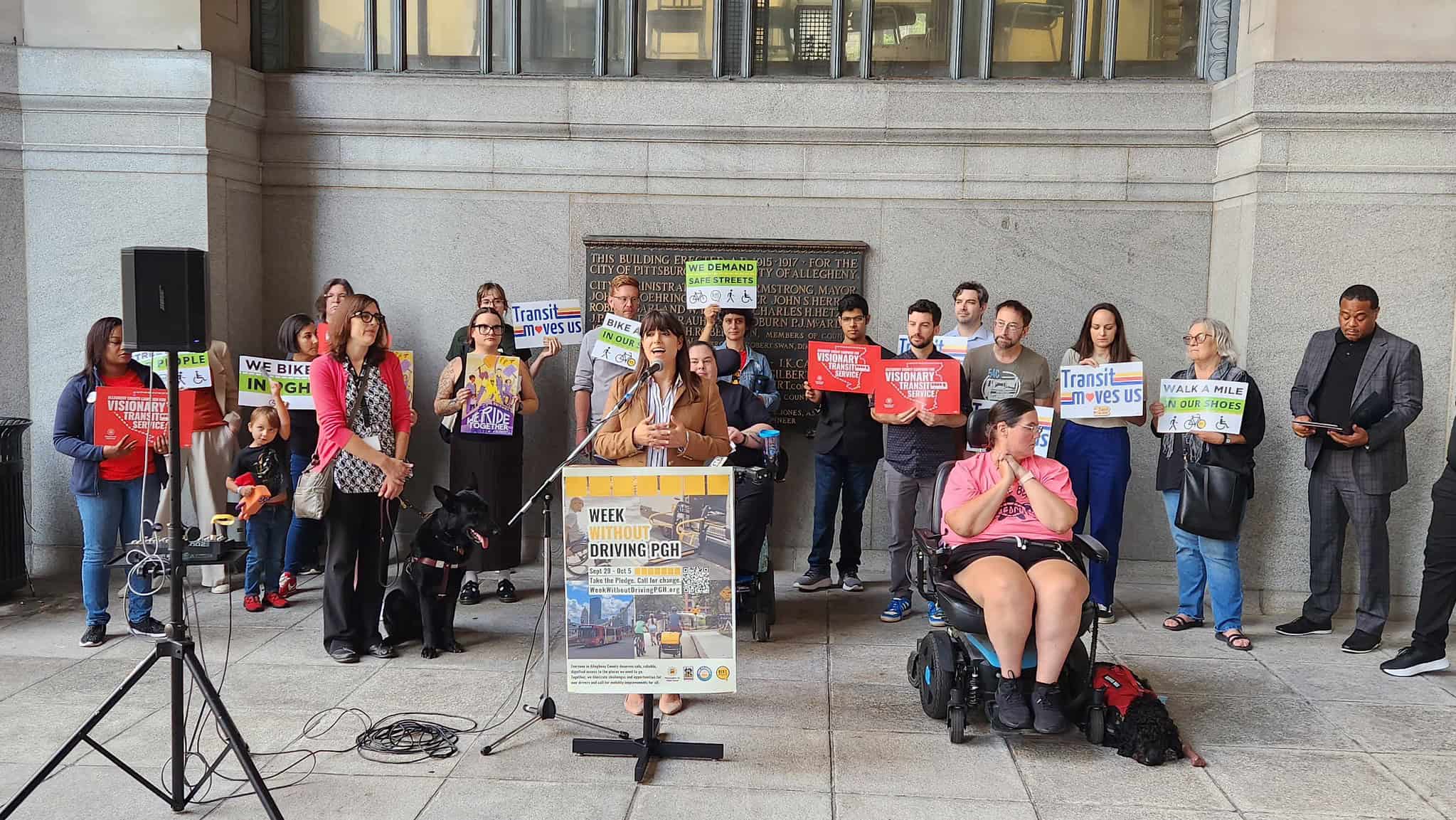
We use our networks and online footprint to help amplify the concerns of residents. A result of our successful campaign for a Complete Streets Policy included the formation of the City’s Complete Streets Advisory Group, or CSAG. This group of residents and professionals directly advises the city on a number of issues. Additionally, our partnership with other organizations, such as Pittsburghers for Public Transit, Age Friendly Greater Pittsburgh, and Access Mob, led to a successful Week Without Driving that uplifted the voices of residents who cannot or choose not to drive a car. Also, recently we’ve partnered with advocates in McKeesport to bring the annual World Day of Remembrance for Road Traffic Victims to our neighboring city who is grieving from traffic fatalities. These types of partnerships help amplify the voices of residents much louder than any of the individual organizations can alone. Finally, since its launch under Mayor Ravenstahl, our advocates have consistently been super users of the City’s 311 system to report problems and get things done. We’ve even created a 311 guide for residents to best take advantage of this city resource.
Elections matter!
Bike, Walk, VOTE. These three words sum up our work. Not only is it important to actually get out there and bike and walk, it’s important that our elected officials are committed to improving your experience and safety. Additionally, it’s crucial that they know that people are paying attention, reading, sharing, and voting. Since 2007, BikePGH has been educating our members and social media followers on how candidates in local elections will push these issues with our Bike Walk Vote! Candidate series.
Making information more accessible
Online across multiple social media networks, our e-newsletters, and blog posts, BikePGH translates technical transportation policy, legislation, and planning processes into everyday language and explainers via video content and helpful visual aids. This helps residents better understand complicated concepts, “planner speak” and how things work. This makes sure that people can plug in and have their voice heard – an essential part of equitable civic engagement, making it easier for them to get involved in their communities.
 NEWSLETTER