by BikePGH Staff Contributor Nora Andrews
Remember: Not everyone bikes, but everyone is a pedestrian at one point or another
In recent years, BikePGH has been working to ramp up our pedestrian advocacy and initiatives.
While “bike” is very clearly in our name and a large part of the work we do, we prioritize the safety and well-being of all road users. We also acknowledge the reality that – while not every person rides a bike – most of us engage with our mobility infrastructure by walking and rolling.
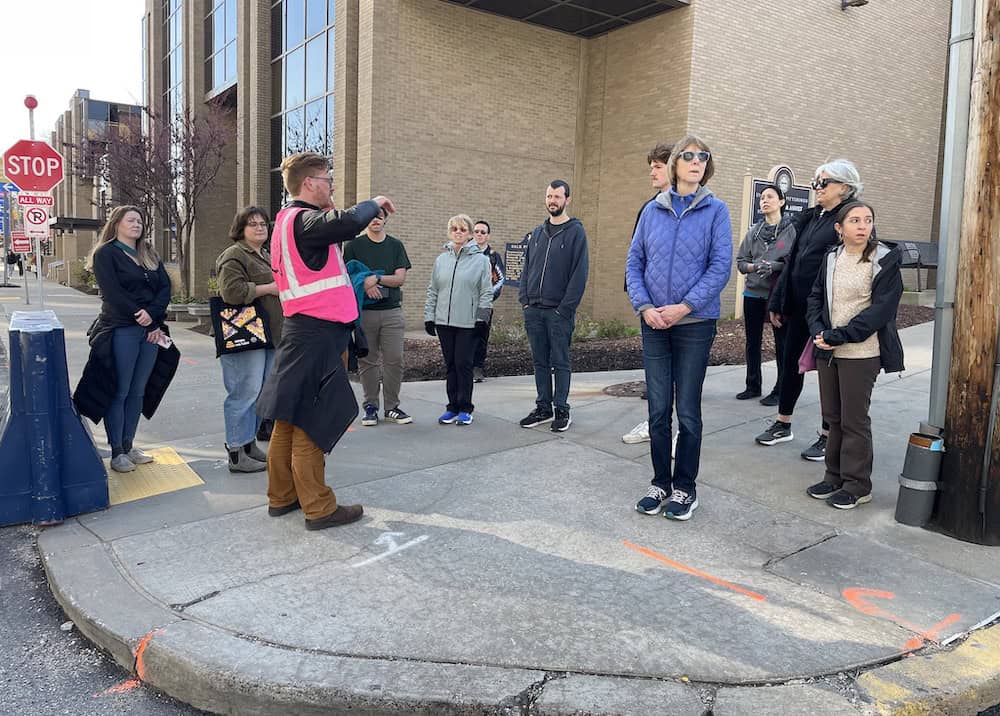
In 2025, as a part of this effort, we introduced Neighborhood Walks, where a group of up to 30 folks take a walk with BikePGH staff to gather, connect, and address mobility concerns they face in their day-to-day lives. We sought to host an event that was part-social event, part-advocacy initiative, for neighbors to learn more about the successes and pitfalls of infrastructure in their own community, and gain touch points for organizing around creating positive change.
Where we walked and what we learned
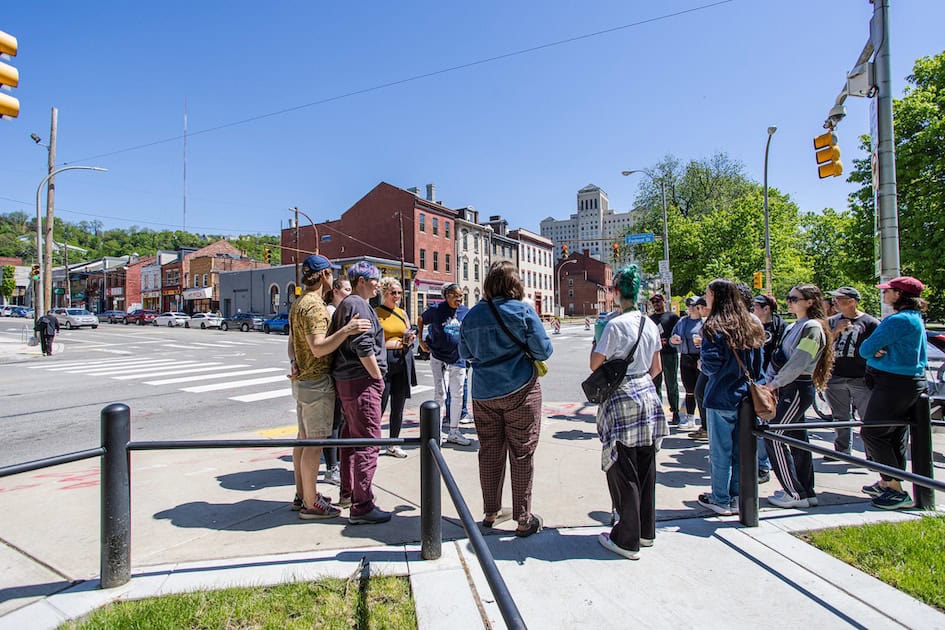
Our goal for the first year of this event series was to spread our reach all over the city – we walked in Lawrenceville, West Oakland, Northside, Homewood, Strip District, South Side, Sheraden, and Friendship. Each of these neighborhoods brought a unique audience, landscape, local character, and their own slew of pedestrian concerns.
In West Oakland, we talked about the tension caused by narrow roads; when cars park partially on sidewalks to avoid their vehicles being scratched, it causes issues for everyone who needs to use that sidewalk. On a road narrow enough, no one wins, and we discussed balancing a community’s need for parking with the need for safe, clear sidewalks. In Friendship, we talked about our city’s neighborways, the pros and cons of roundabouts, and how their introduction has changed the way residents move around their communities.

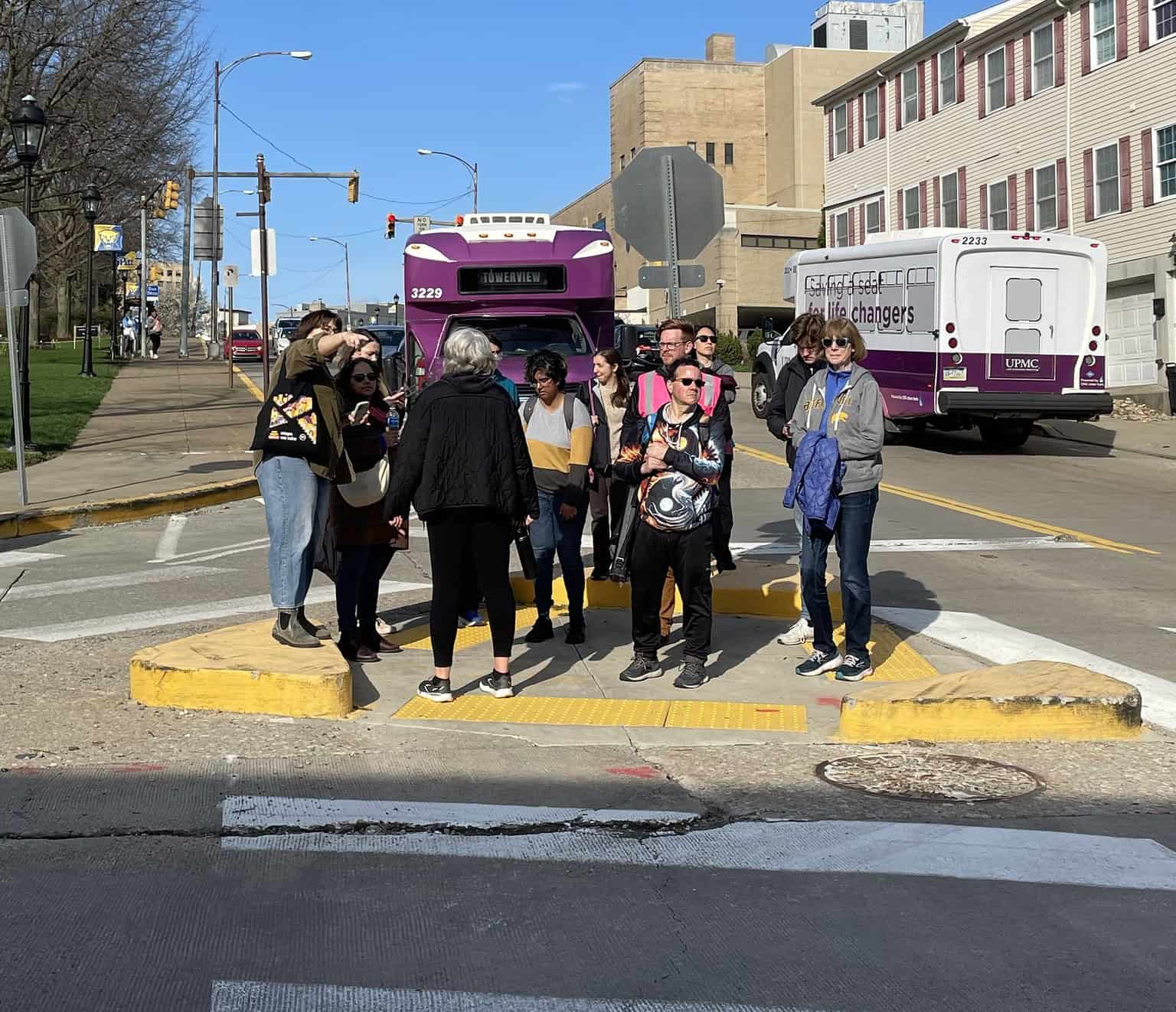
In all neighborhoods, we learned about the techniques and traffic-calming measures that planners use, such as bump outs/curb-extensions, pedestrian islands, and curb ramps. When we surveyed our event attendees, 93% said they learned something new!
At all of our walks, we discussed intersections people feel unsafe at, and imagined what types of infrastructural and cultural improvements would make us safer. For example, at large intersections like Penn/Negley, or Butler/40th, we thought about how pedestrian islands could make long crosswalks feel a bit safer, especially for those of us that move a little slower.
Walking our neighborhoods, building change
As we’ve shared countless times before, about a quarter of all Pittsburgh households do not have access to a personal vehicle. This means that all over Pittsburgh, in every neighborhood, there are people who rely on our roads, sidewalks, and public transportation systems to get around, and often. When those resources are not adequately maintained, all road users suffer. Approximately 20 Pittsburghers die every year while traveling our streets, many of whose lives could have been saved by infrastructure that serves them better.
We are so used to having bad infrastructure around us, that we don’t even notice it most of the time – crumbling sidewalks, outdated ADA ramps, and long, treacherous crosswalks are all part of our day-to-day lives. On our Neighborhood Walks, we ask residents to take a look with a more discerning eye at the reality all around them. What can we notice, and how can we use those observations to create a better world?
One initiative that is putting some of these observations to good use is the Safe Sidewalks Crew – a sidewalk assessment project launched by Pittsburgh Walks in partnership with BikePGH, Access Mob Pittsburgh, and the City of Pittsburgh’s Department of Mobility and Infrastructure.
As stated via their website:
“We are organizing volunteers to assess the quality of sidewalks in Pittsburgh, and record findings via a mobile app developed by the City. The collected data helps the City identify where sidewalks need to be improved or built, prioritize pedestrian infrastructure projects, and make the case for funding. Meanwhile, the volunteers who collect the data are building a community to advocate for the infrastructure we need to thrive.”
At times it may feel overwhelming, the amount of concerns we have with our roads and sidewalks, but initiatives like the Safe Sidewalks Crew show that with the right resources, a dedicated group of people, and some time, we can begin to affect change in our community.
We know how important it is for people to connect face-to-face, especially in a world that is increasingly isolated, indoors, and online.
Besides learning about safety and infrastructure, these walks helped us to create new connections, both to our mission and between neighbors. One of my favorite things during this series was the opportunity to chat with folks who had never even heard of BikePGH before, and to learn more about their vision for their communities. In fact, 81% of walk participants had never been to a BikePGH event before, and 19% of those people attended one of our other events after the walk.
We hope that, in 2026, our continuing Neighborhood Walks initiative can help us to continue with pedestrians of all stripes, as we deepen relationships, spark new conversations, and build safer, more connected streets together.
 NEWSLETTER